

Overview of Common Stains
Full overview of the most common stains, including how to identify them and treat them
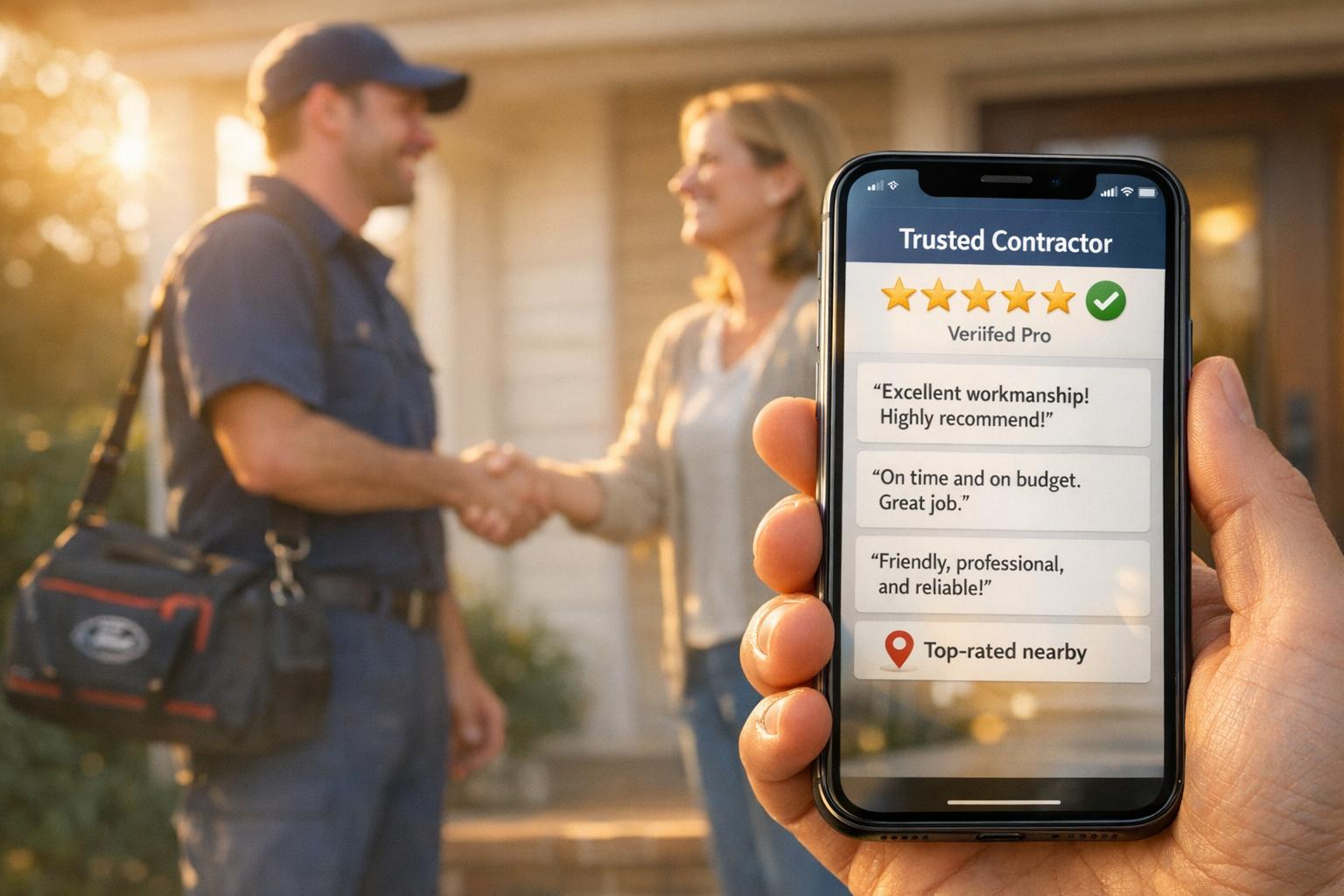
When homeowners choose a contractor, trust is critical. Online reviews are now the go-to way for building that trust. Here’s why they matter:
Reviews don’t just establish trust; they also attract more clients, justify higher rates, and simplify the lead generation process. Contractors who actively collect and manage reviews can stand out in a competitive market. Simple strategies like asking for feedback after completing a job, responding to reviews quickly, and using tools to automate requests can make a huge difference.

How Online Reviews Impact Contractor Business Success - Key Statistics
Reviews are a trust-building powerhouse, especially before homeowners even make that first call. With 96% of consumers reading reviews for local businesses and 93% admitting that reviews directly influence their buying choices, it’s clear that social proof is no longer a nice-to-have - it’s a must-have for home service credibility today.
A well-written review does more than just rate your service; it tells a story. It highlights a customer’s problem and how you solved it, creating an emotional connection that pricing or service details alone can’t achieve. Reviews also ease concerns. For big-ticket projects like kitchen remodels or roof replacements, homeowners want proof that you’re reliable. Positive reviews provide that reassurance, reducing doubts even before the first conversation.
The financial benefits of strong reviews are hard to ignore. Around 86% of customers are willing to pay more for businesses with better ratings, while 70% won’t even consider a company with less than a 4-star rating. Timeliness matters too - 20% of consumers say reviews from the past two weeks carry significant weight in their decisions. Fresh reviews not only show that your business is active but also that you consistently deliver quality work. And beyond trust, reviews play a key role in boosting your online visibility.
Reviews don’t just build trust - they’re also a major factor in how visible your business is in local search results. In fact, review signals make up 17% to 20% of the factors that determine local pack rankings, second only to your Google Business Profile.
Tim Brown, Founder of Hook Agency, notes that review signals account for about 15% of local SEO pack ranking factors.
Consistently gathering 8–12 reviews per month signals to Google that your business is in demand, helping you outshine competitors with fewer or outdated reviews. Plus, the algorithm pays attention to the keywords in review text - phrases like "emergency pipe burst" or "roof replacement" can boost your rankings, even if those terms aren’t prominently featured on your website. Businesses that hit 100 reviews often see their Google Maps clicks triple, turning visibility into real customer inquiries.
Displaying reviews on high-intent pages - like contact forms or quote request pages - can be the final push that turns curious visitors into paying customers. These reviews answer the unspoken questions homeowners often have: Will they show up on time? Can they deliver quality work? Are they trustworthy?
Take AD Green Gutters and Screens as an example. They went from having just seven reviews over seven years to 47 reviews in just 18 months. By using strategies like QR-linked business cards and asking for reviews during final walkthroughs, they now average 2–4 new 5-star reviews each month. This steady stream of positive feedback allows them to focus on value rather than price, justifying premium rates because potential customers feel more confident in their choice.
Strong reviews also simplify the sales process. When prospective clients see detailed, positive experiences shared by others, they’re less likely to shop around or request multiple quotes. In many cases, they’ve already decided - they just need to book the job.
Collecting and managing reviews is essential for building trust as a contractor and boosting your online visibility.
The best time to ask for a review is during the "magic moment" - right after completing a service when the customer is most satisfied. Think about moments like unveiling a newly remodeled kitchen, repairing a furnace on a bitterly cold night, or solving a homeowner's urgent issue. Timing is everything, as 70% of customers will leave a review if you simply ask.
Make it easy for them. Share a direct link to your Google review page or hand out business cards with a QR code they can scan instantly. Text messages are especially effective, boasting open rates above 90%, compared to just 20% for emails. When making the request, focus on getting honest feedback rather than pushing for a perfect rating. For example, you could say: "Did we meet your expectations today?" If they respond positively, follow up with: "That’s great to hear! Would you mind sharing your experience on Google? It helps other homeowners find us".
Personalizing your request adds a thoughtful touch. Use the customer’s name and reference the specific job, like "your water heater replacement" or "the roof repair on Elm Street." This makes the interaction feel genuine rather than generic. Train your team to pick up on "praise signals" from customers and send a review link via text while their satisfaction is fresh.
Incentives can help increase review rates, but tread carefully. Starting in 2024, the FTC can issue fines of up to $51,744 per violation for incentivizing reviews tied to specific ratings. This means you can’t reward only five-star reviews. Any incentive must apply to all feedback and must be transparently disclosed.
Some ethical options include entering all reviewers into a monthly gift card drawing, offering a small discount on future services to anyone who leaves a review, or donating to a local charity for every review received. Avoid "review gating," where you only ask satisfied customers to leave reviews, as Google strictly prohibits this practice. Ultimately, exceptional service is your best tool for earning honest feedback - especially since 88% of people trust online reviews as much as personal recommendations.
Manually requesting reviews can be time-consuming. That’s where CRM systems come in handy. These tools can automatically send review requests when a job is marked "complete" or after an invoice is paid, ensuring no customer is overlooked. Consistency in review collection can also improve your local SEO rankings.
Automation doesn’t mean losing the personal touch. Modern CRMs can pull details like customer names, technician information, and service types directly from your records, making each message feel tailored rather than generic. For instance, a message might say: "Hi John, thanks for choosing us for your roof repair. We’d love to hear how we did!" If there’s no response, a polite follow-up can be sent 48 hours later.
Platforms like Estatehub combine CRM tools with review management, allowing you to monitor feedback from Google, Facebook, and more - all from one dashboard. This is crucial because 89% of customers expect businesses to respond to reviews. Responding within 24–48 hours can enhance your reputation and improve your local search rankings. While setting up automation takes some effort upfront, it ultimately saves time and lets your team focus on delivering exceptional service instead of chasing reviews.
Once you have a system for collecting reviews, the next step is learning how to respond to them effectively.
Responding to reviews is crucial for maintaining a strong online presence. Here’s why it matters: 89% of consumers read replies to reviews, and 97% pay attention to follow-up responses, with 71% stating that responses improve their perception of a brand. Even more telling, 64% of consumers prefer companies that respond to reviews over those with perfect ratings but no interaction. These strategies will help you respond effectively and make the most of customer feedback.
A positive review is more than just a pat on the back - it’s a chance to strengthen customer loyalty. Avoid generic replies like "Thanks!" Instead, personalize your response by addressing the customer by name and referencing details from their experience. For example, mention the specific service provided, like, "We’re thrilled the new water heater is working perfectly for you!".
Timing is key - respond within 24–48 hours to show you value their input. Keep your reply warm and professional, but concise. A few thoughtful sentences are more impactful than a lengthy response. You can also use the opportunity to mention related services, such as maintenance plans or extended warranties, and encourage satisfied customers to refer their friends and family. Personalized, timely replies turn happy customers into loyal advocates.
Negative reviews can be tough to read, but they’re also a chance to show your dedication to customer satisfaction. The faster you respond - ideally within 24–48 hours - the better. Always remain calm and professional, as public disputes can harm your brand’s image.
Start by acknowledging the issue and offering a genuine apology. Provide contact details to take the conversation offline and resolve the issue privately. Once resolved, update your public response or add a "Status: Resolved" note to highlight your follow-through.
As GC Sherpa explains, "A thoughtful response to a bad review isn't just for the one reviewer – it's for everyone watching how you handle customer satisfaction issues".
By handling negative feedback professionally, you demonstrate your commitment to resolving issues and build trust with potential customers.
Keeping tabs on your online reviews is just as important as responding to them. Regularly monitor reviews across major platforms - weekly is a good rule of thumb - and respond promptly to maintain a strong online reputation. Reviews influence about 9.8% of search engine ranking factors, and over half of reviewers expect a response within one week, with 25% expecting one within three days.
Negative feedback can also act as a free audit, helping you pinpoint recurring issues in areas like scheduling, communication, or service quality. Use this insight to improve your operations. To streamline the process, consider using modern CRM tools that send alerts for new reviews. Platforms like Estatehub offer dashboards that consolidate reviews from multiple sources, making it easier to respond quickly and stay on top of your reputation. Consistent monitoring and thoughtful engagement with reviewers can bolster credibility and turn prospects into loyal customers.
Placing reviews in the right spots can make a big difference in how potential customers perceive your business. With over 90% of consumers reading online reviews before buying something, and 91% of homeowners relying on them to choose contractors, showcasing positive feedback effectively is crucial. The trick is to feature your best reviews on your website, social media, and within your advertising efforts.
Your website is often the first stop for potential customers, so it’s the perfect place to display reviews. Highlight them on your homepage to establish trust right away. Consider creating a dedicated testimonials page for visitors who want to dig deeper into customer experiences. You can also place reviews on service-specific pages (like a "Plumbing Repair in Austin" page) to target customers with specific needs.
Using third-party widgets that pull live reviews from platforms like Google, Yelp, or Facebook can help. These live displays often feel more genuine than manually added testimonials. For even more impact, add Reviews Schema markup to your site. This feature helps search engines show star ratings directly in search results, boosting your credibility. Including details like the reviewer’s name and city (e.g., "John in Reno says…") adds a local touch that resonates with nearby customers.
Bradley Lollock, an SEO expert at ZipLocal, describes it perfectly: "A 5-star review is a high-value asset sitting in your digital vault".
Once your website is set, take the next step by sharing reviews on social media.
Social media is a powerful tool for amplifying your reviews. Nearly half of small businesses regularly post reviews on their social platforms, and 40% of consumers use these channels to research new brands. Sharing screenshots of glowing 5-star reviews or creating eye-catching graphics featuring customer feedback (like "fixed the leak in two hours") can grab attention and build trust.
Platforms like Nextdoor are especially useful for hyper-local referrals. A single positive mention here can spark multiple inquiries from nearby residents. Always share testimonials in full to maintain context and avoid misrepresenting the customer’s experience.
Customer reviews are a goldmine for advertising. Incorporating star ratings and quotes into Facebook vs Google Ads campaigns, or display ads adds instant credibility to your message. Statistics show that services with five or more reviews are 270% more likely to be chosen compared to those with none.
It’s important to use reviews that were given freely - offering incentives for testimonials can lead to skepticism and may even violate platform rules. Beyond digital ads, you can feature reviews on physical marketing materials like yard signs, truck magnets, or door hangers. These can turn every job site into a mini billboard for your business.
For home service providers, tools like Estatehub make it easier to integrate reviews into paid ad campaigns and websites. By showcasing reviews across multiple platforms, you can strengthen your credibility and convert more leads.
Here’s a quick reality check: 91% of homeowners use reviews to decide on a contractor. Plus, just a one-star improvement in your rating can increase revenue by 5% to 9%. Reviews don’t just help with credibility - they also improve local search rankings and convert leads before you’ve even had a chance to talk to potential customers.
To make the most of reviews, timing is everything. Sending review requests within an hour can increase response rates by 70%. On top of that, responding to reviews within 24 to 48 hours shows you’re professional and engaged. And don’t forget consistency - adding 8–12 new reviews each month keeps your Google profile active and relevant.
"Trust is the currency. Home services require inviting strangers into people’s homes... Reviews provide the social proof that you're trustworthy." – FieldServ AI Team
The takeaway? Reviews aren’t just an add-on; they should be woven into every part of your marketing strategy. Use them on your website, social media, and even in ads to amplify their impact. Tools like Estatehub simplify the process by helping you request reviews, showcase testimonials, and track your reputation metrics - all in one place.
Consistently collecting positive reviews, particularly right after completing a job, can significantly boost your reputation. While there’s no magic number of reviews required to increase calls, building a steady flow of feedback over time can strengthen your credibility and open the door to more inquiries and business opportunities.
When you encounter a negative review, the key is to stay composed and avoid any knee-jerk reactions. Aim to respond professionally within 24-48 hours. Start by acknowledging the concern raised, offer a sincere apology if necessary, and suggest resolving the issue privately - this could be through email, a phone call, or another direct channel.
Treat the feedback as a chance to refine your services and demonstrate your commitment to customer satisfaction. When handled thoughtfully, even a negative review can become an opportunity to build trust and strengthen your reputation.
The best moment to ask for reviews is either right after completing a job or within the first 24 hours. Why? That’s when the experience is still fresh in your customer’s mind. To make it even easier, include direct links or QR codes in your follow-up emails or text messages. This cuts down on effort for your customer and increases the likelihood of them leaving a review.
Want to streamline the process even further? Automate your review requests. Automation ensures you’re consistently collecting feedback without needing to send manual reminders every time. By combining good timing with an effortless process, you’ll naturally encourage more customers to share their thoughts.
Sign up for the newsletter and be the first to read our articles.


Every single person on our agency team has spent a lot of time in the field either running their own business or working for larger marketing agencies. We have all put in the time responding to leads, helping customers, scheduling and doing services. This gives us a massive advantage when making decisions.
One thing that has always been very special to us, is the fact that (excluding spam / people that never used our services) we do not have any bad reviews. This absolutely does not mean we have never had unhappy clients, but if it happens, we make it right, and stand behind our promises.
We have seen, time and time again, other agencies using strategies and structuring campaigns the way that they are technically supposed to. Most of these "best practices" that are taught in our industry, simply do not transfer into local lead gen. This is partially because we do have a much different target audience, and are typically spending less, however optimizing for website traffic does not work here.
We have been there, jumping into starting a home service business, struggling, and doing everything wrong. It's humbling. Our team has all felt the highs and lows, which is why we get so excited for our clients to win, we know how good it feels.

Estatehub is not a normal agency, we know "clicks" don't get you sales. Let us show you how lead gen experts do it.

