


Overview of Common Stains
Full overview of the most common stains, including how to identify them and treat them
Review monitoring is a game-changer for home service businesses. Here's why:
Tracking reviews helps you identify problems, improve local SEO rankings, and boost customer trust. But manual monitoring is time-consuming and often misses key trends. Automated tools like Google Alerts, Semrush, or Estatehub simplify this process, letting you focus on actionable insights.
Want to stay ahead? Analyze competitor reviews for recurring complaints, adjust your services, and request reviews from satisfied customers. Engaging with reviews and addressing negative feedback can solidify your reputation and improve your bottom line.

Review Monitoring Statistics for Home Services: Key Metrics and Impact
Keeping tabs on competitor reviews can feel like trying to juggle too many balls at once. Reviews are scattered across platforms like Google, Yelp, Angi, Facebook, Houzz, and the Better Business Bureau. Manually checking each one is not only exhausting but also incredibly time-consuming. To make matters worse, many modern websites load review counts dynamically or hide them behind tabs, meaning standard monitoring tools often miss critical data unless you painstakingly scroll and click through every page.
These issues create challenges in several key areas:
Without automated tools, it’s easy to overlook important shifts. Say a competitor drops from a 4-star rating to 3 stars in just two weeks. That’s a big deal - customer trust can plummet by as much as 67%. But if you’re not actively checking at the right moment, you’d never know. Similarly, a sudden spike in reviews could hint at new strategies or promotions, but without automated tracking, these insights might slip through the cracks. Even patterns like repeated complaints or a sharp drop in ratings could go unnoticed, leaving you blind to key strategic opportunities.
"Review counts are often a direct proxy for sales velocity." – Monity.ai
Failing to monitor these changes doesn’t just limit your ability to track performance - it also makes competitive benchmarking nearly impossible.
Tracking your reviews in isolation can leave you in the dark about how you stack up against competitors. For example, if nearby competitors average 4.7 stars with hundreds of reviews while you hover at 4.2 stars, you could be losing business without even realizing it. Metrics like average ratings, review volume, and response times are essential benchmarks for measuring the effectiveness of your reputation management efforts.
Take ABC Plumbing, for instance. In 2024, they analyzed competitor reviews and noticed recurring complaints about slow responses and unclear pricing. They acted fast, introducing guaranteed same-day quotes and flat-rate pricing. The result? A 78% boost in customer satisfaction and a 50% increase in reviews mentioning "timely service" within six months.
Customer priorities vary from one market to another. In one city, punctuality might be the top concern, while in another, transparent pricing or eco-friendly practices could take center stage. If you’re not paying attention to what customers are saying about your competitors, you’re left guessing about what matters most in your area.
ABC Paint & Co. learned this the hard way. They noticed competitors were often criticized for sloppy cleanup and paint overspray. In response, they introduced strict cleanup protocols and started sharing photos of completed workspaces. Within six months, their 5-star reviews citing "attention to detail" jumped by 40%, and referral rates climbed by 36%. This shows how valuable localized competitor insights can be in fine-tuning your services.
| Challenge | Impact on Your Business |
|---|---|
| Platform Fragmentation | Tracking metrics like review volume and average ratings across multiple platforms manually becomes overwhelming |
| Dynamic Web Pages | JavaScript-loaded content and hidden tabs often prevent tools from capturing key data |
| Unstructured Comments | Analyzing text reviews for actionable insights is a daunting task at scale |
| Delayed Discovery | Spotting negative trends or review surges too late can mean missed opportunities to act |
Reviews do more than just make your business look good - they play a big role in helping customers find you online and decide whether to trust you. High-quality reviews can improve your local search rankings and help you build credibility with potential customers. By understanding this connection, you can use reviews to gain an edge over competitors.
Reviews are one of the three key factors Google uses to rank local businesses, alongside relevance and distance. In fact, review signals contribute about 17% to 20% of the factors that determine if your business appears in the highly sought-after Google Local 3-Pack - the top three businesses shown on the map. This makes reviews the second most important ranking factor, just behind your Google Business Profile.
Google doesn’t just look at the number of stars you’ve earned. The algorithm also scans review text for keywords. For example, if a customer mentions "emergency pipe repair" in their review, Google might highlight that phrase in search results, increasing your visibility for that service. Fresh reviews matter more - 73% of consumers only consider reviews written in the past month. A steady flow of 1–3 reviews per week signals to Google that your business is active and reliable, but a sudden spike in reviews might trigger spam filters.
"A 5-star review from two years ago contributes far less to your ranking than a 4-star review from last week." – RatesOnTap
Businesses with more than 10 reviews often see a noticeable improvement in rankings, as this threshold moves them out of "unverified" territory. Even AI-driven search tools like Gemini and ChatGPT use review patterns across platforms to filter trustworthy businesses, often excluding those with ratings below 4.0 stars.
While reviews influence rankings, they also build the trust you need to convert searchers into customers.
Nearly 98% of consumers read online reviews before choosing a local business, and 87% check reviews specifically when hiring home service providers. Since customers are inviting you into their homes, reviews act as social proof that you’re professional, reliable, and skilled.
Interestingly, a perfect 5.0 rating can sometimes work against you. Businesses with ratings between 4.0 and 4.5 stars tend to get the most clicks, as a flawless score may seem too good to be true. A mix of positive and slightly critical reviews feels more genuine.
The financial benefits are undeniable. A one-star increase in your average rating can lead to a 5% to 10% rise in revenue. Businesses with 4 stars or higher earn 32% more revenue compared to those with lower ratings. Additionally, 86% of customers are willing to pay more for service providers with higher ratings and reviews. High-quality reviews can shift the focus of sales calls from proving your credibility to discussing project details and scheduling. If you need help managing your online reputation, you can book a call with our team.
Reviews don’t just impact search rankings and trust - they also reveal areas where your business could improve. Keeping an eye on competitor reviews can help you identify common complaints in your industry. For example, if customers frequently mention "pricing surprises" or "poor communication" in negative reviews of your competitors, you can address these issues head-on by offering transparent quotes or improving communication.
82% of consumers actively look for negative reviews to assess potential risks. By analyzing what frustrates customers most, you can adjust your approach. If competitors’ reviews mention hidden fees, emphasize clear and upfront pricing in your marketing. If positive reviews highlight actions like "the technician wore shoe covers", make those practices part of your standard procedures.
Modern AI tools can even sort competitor reviews into categories like service speed, cleanliness, and professionalism, helping you pinpoint exactly where others fall short. This insight allows you to stand out by addressing common pain points - whether that’s guaranteeing arrival times, leaving job sites spotless, or offering same-day quotes.
Keeping tabs on competitor reviews is easier than ever with automated tools. By combining free resources with paid platforms, you can gain a clear picture of your own performance while staying ahead of the competition. Here’s how to build a system that works.
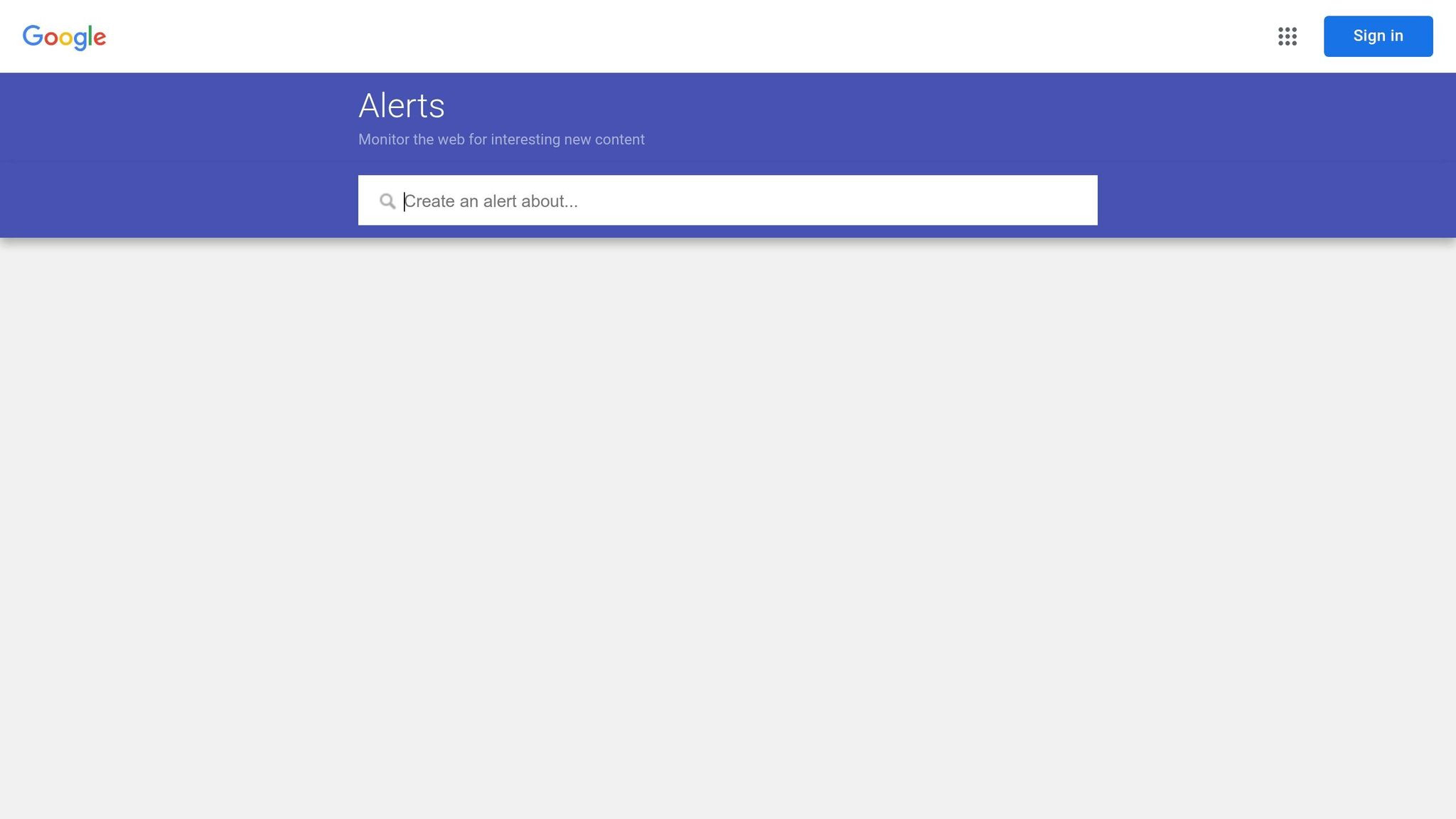
Google Alerts is a free and simple way to track competitor mentions. It sends email notifications whenever new content with your chosen keywords is indexed online. To get precise results, use advanced search operators. For example, put your competitor’s name in quotes (like "ABC Plumbing") for exact matches, or combine keywords with the AND operator (e.g., "ABC Plumbing" AND "review"). You can even tailor alerts to focus on specific service areas or complaint-related terms, ensuring you only receive updates that matter most. This setup is a great starting point for diving into deeper analysis with more advanced tools.
Paid platforms take review tracking to the next level, offering insights that can help you fine-tune your strategy. For example, Semrush Local Review Analytics (starting at $139.95/month for the Pro plan) compares review counts, response times, and ratings across one- and three-month periods with local competitors. Its Categories Widget even identifies which service categories your competitors are listed under, helping you optimize your Google Business Profile for better search visibility.
Platforms like Brandwatch and Birdeye use AI to classify competitor reviews as positive, negative, or neutral. Birdeye monitors reviews from over 200 global and niche sites, giving you a comprehensive view of competitor performance. Considering that 34% of marketers say online reviews are their top source of new leads, these insights are invaluable.
"Being able to monitor and respond to reviews appropriately in a timely manner through Birdeye is a game changer."
For those on a tighter budget, tools like SpyFu ($39/month) and Brand Mentions ($49/month) offer essential monitoring features. If you’re looking for a more streamlined approach, some platforms consolidate data across multiple sources for easier management.
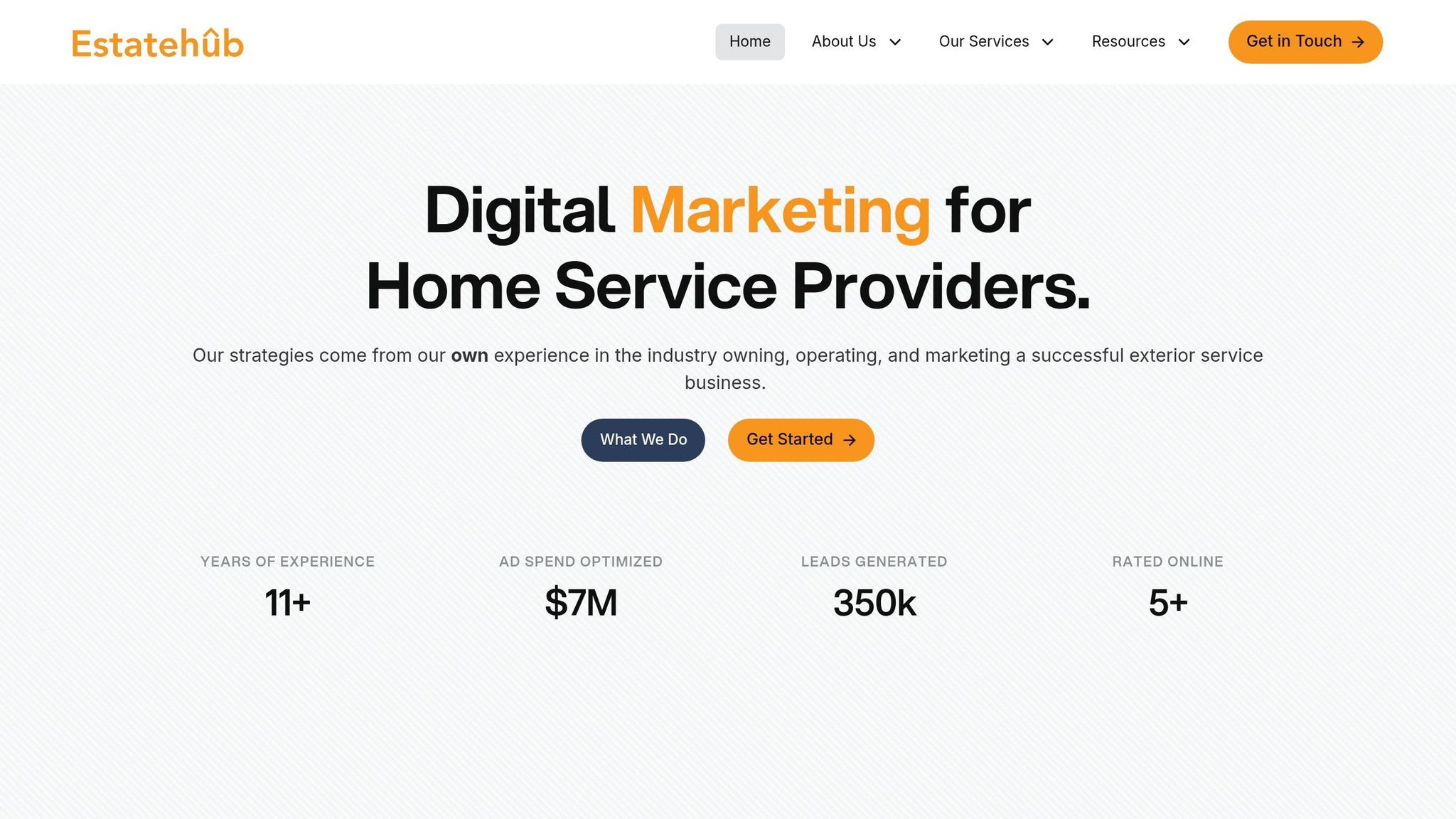
For an all-in-one solution, Estatehub integrates review tracking directly into its SEO services and HighLevel CRM tools. With over 11 years of experience in the home services industry, Estatehub has optimized more than $7 million in ad spend and generated 350,000 leads. They fine-tune campaigns 2–3 times a week to quickly adapt to market changes.
"We have the data and experience to know what will deliver you the best results. Our process always starts with us learning about your business and setting you up with a marketing plan that will work."
Estatehub’s results speak for themselves. Boasting a 5/5 star rating and a "make it right" policy, clients have described their outcomes as "life-changing." Their dedicated team goes the extra mile to help businesses scale.
Competitor review data plays a big role in shaping your local SEO performance, especially when it comes to Google's local pack rankings. Review signals make up about 17% of the factors influencing these rankings, second only to your Google Business Profile. This means the data you gather from reviews can directly affect whether your business appears in the top three map results when customers search for services like yours. By analyzing this information, you can refine your keyword strategy and better align with local search trends. Comparing your performance to local competitors also highlights areas for improvement.
Start by analyzing the top three competitors in your local map pack. The goal isn’t to copy them but to identify gaps you need to close to stay competitive. A simple comparison table can help track key metrics:
| Metric | Competitor A | Competitor B | Your Business | Action Needed |
|---|---|---|---|---|
| Average Rating | 4.6 | 4.4 | 4.0 | Focus on improving service quality |
| Total Reviews | 150 | 200 | 80 | Increase review requests |
| Recent Reviews (Last 30 Days) | 6 | 8 | 2 | Maintain a steady review flow |
| Response Rate | 95% | 100% | 60% | Respond to all reviews promptly |
Consistency in review activity is key. Google prefers businesses that generate regular reviews (around 4–8 per month) over those with a large number of outdated reviews. If your competitors are collecting fresh feedback every week while you’re only getting reviews every few months, you risk falling behind.
Pay attention to the keywords used in competitor reviews. For example, if customers frequently mention terms like "emergency pipe repair" or "same-day HVAC installation", Google associates those services with their business. If your reviews lack similar phrases, you’re missing an opportunity to reinforce your local relevance.
Here’s a surprising stat: while 83% of customers respond to direct review requests, only 1.5% leave reviews without being asked. That’s a huge opportunity, but the key is to make the process easy and natural for your customers.
Timing is everything. Ask for reviews at peak satisfaction moments, like right after fixing a leak or restoring a customer’s air conditioning. Train your team to say something like, “If you’re happy with our service, we’d really appreciate it if you could share your experience online.” Follow up with a text message containing a direct link to your Google review page within 24 hours.
Text messages work better than email for this purpose - SMS has a 98% open rate compared to just 20% for email. If the first request doesn’t get a response, send a polite reminder 48–72 hours later, but don’t overdo it. Respect for your customers’ time is crucial.
When asking for reviews, guide customers to include specifics without being too prescriptive. For example, you might say, “We’d love to hear about your experience with our plumbing repair service and how we handled your emergency call.” This naturally encourages feedback that includes keywords, boosting your local search relevance.
It’s also important to respond to every review - positive or negative - within 24–48 hours. This isn’t just about good customer service; 88% of consumers are more likely to choose a business that actively engages with reviews. Plus, it signals to Google that your business is active, which can improve your ranking.
Competitor reviews can reveal what customers want and where others are falling short. Look for recurring complaints in their feedback - issues like slow response times, unclear pricing, or limited availability. Each of these is an opportunity for your business to stand out.
Conduct a review-based SWOT analysis (Strengths, Weaknesses, Opportunities, Threats). For example, if competitors are criticized for "limited service hours", offer evening or weekend appointments. If one competitor is praised for "transparent pricing" while another is slammed for "surprise fees", emphasize your upfront pricing policy.
Interestingly, a perfect 5.0 rating might not be as desirable as you think. Studies show that consumers trust businesses with a mix of ratings, averaging between 4.2 and 4.5, more than those with flawless scores. Instead of chasing perfection, focus on authenticity and continuous improvement.
Finally, track patterns in your own negative reviews alongside competitor data. If both you and your competitors are facing similar complaints - like difficulty scheduling - it could indicate a market-wide issue. Addressing these problems first can give you a competitive edge. Use these insights to adjust your services and improve customer interactions.
Understanding competitor reviews plays a crucial role in sharpening your local SEO and service strategies. Review signals account for about 16% of local pack ranking factors, meaning the businesses dominating those top three map spots are actively managing their online reputation. Overlooking competitor reviews means missing out on insights that could help you climb higher in rankings and secure more business.
Monitoring reviews isn’t just about protecting your reputation - it’s also about boosting your revenue and standing out in the market. In fact, 34% of marketers now consider online reviews their top source for new leads. But it’s not simply about collecting five-star ratings. It’s about decoding the market. By analyzing competitor review patterns, you can uncover opportunities to differentiate your business and address unmet customer needs.
These insights go beyond revenue potential - they shape your digital strategy. Instead of manually scouring review sites, tools like Estatehub streamline the process by consolidating review tracking and competitor analysis into one platform. Features like automated alerts and AI-driven analysis make it easier to act on these insights, saving time and improving your local SEO efforts.
Start by setting up Google Alerts for your competitors, monitoring their ratings, and engaging with reviews promptly. As you gather more data, patterns will emerge - whether it’s gaps in service, pricing strategies, or evolving customer expectations - that can directly inform your marketing and operational decisions.
Your competitors are already being reviewed. The real question is: Are you using those insights to stay ahead?
Start by keeping an eye on major platforms like Google, Yelp, HomeAdvisor, and Angi. Don’t overlook industry-focused sites like Houzz or even local directories - these can be goldmines for customer feedback. Regularly monitoring these channels helps you stay informed about what people are saying and gives you the chance to manage your online reputation effectively.
Responding to reviews promptly - ideally within 24 hours - plays a big role in building trust and boosting your rankings. Quick responses, especially on the same day or within 24-48 hours, show customers you value their feedback, which helps strengthen credibility and satisfaction.
When it comes to local SEO, reviews carry a lot of weight. Four key metrics can significantly influence your search rankings and visibility:
Focusing on these metrics can make a noticeable difference in how your business performs in local search results.
Sign up for the newsletter and be the first to read our articles.


Every single person on our agency team has spent a lot of time in the field either running their own business or working for larger marketing agencies. We have all put in the time responding to leads, helping customers, scheduling and doing services. This gives us a massive advantage when making decisions.
One thing that has always been very special to us, is the fact that (excluding spam / people that never used our services) we do not have any bad reviews. This absolutely does not mean we have never had unhappy clients, but if it happens, we make it right, and stand behind our promises.
We have seen, time and time again, other agencies using strategies and structuring campaigns the way that they are technically supposed to. Most of these "best practices" that are taught in our industry, simply do not transfer into local lead gen. This is partially because we do have a much different target audience, and are typically spending less, however optimizing for website traffic does not work here.
We have been there, jumping into starting a home service business, struggling, and doing everything wrong. It's humbling. Our team has all felt the highs and lows, which is why we get so excited for our clients to win, we know how good it feels.

Estatehub is not a normal agency, we know "clicks" don't get you sales. Let us show you how lead gen experts do it.

