Want more local leads for your home service business? Here’s the deal: 78% of local searches lead to contact or visits within 24 hours, and most users stick to the top three Google Map results. If your business isn’t optimized for local SEO, you’re missing out.
Here’s what you need to do:
These strategies work together to enhance your visibility, attract more leads, and keep your phones ringing. Don’t just aim to rank - make sure your business is the one customers call first.

Local SEO Statistics and Impact for Home Service Businesses
How To DOMINATE Local SEO For Home Service Companies in 2025
1. Claim and Optimize Your Google Business Profile
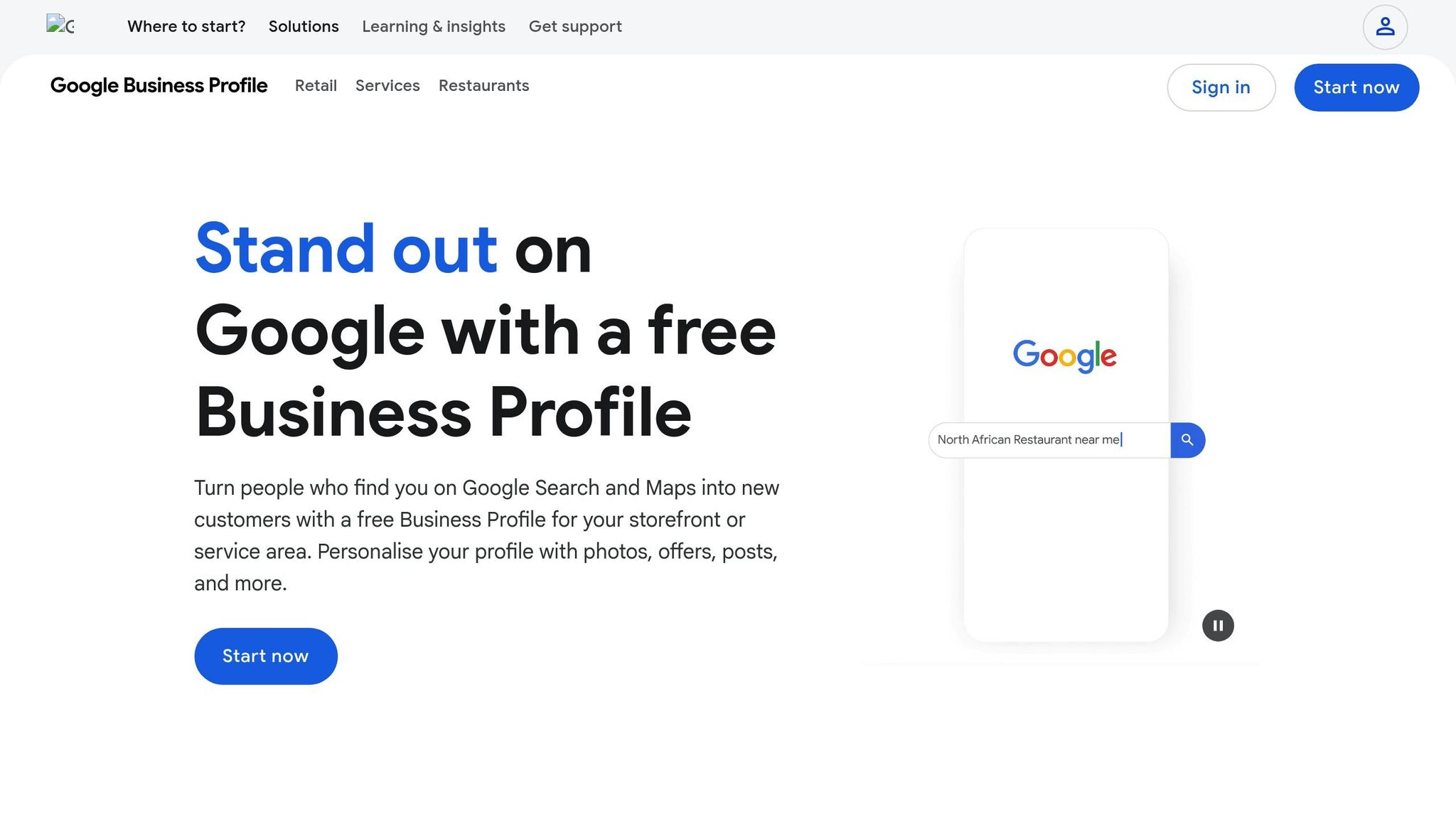
Your Google Business Profile (GBP) is a game-changer for local home service businesses. It’s no exaggeration to say that GBP signals account for about 32% of the total Map Pack ranking weight. When someone searches for "emergency plumber near me" at midnight, Google relies heavily on how well your profile is set up to determine if you make it into those coveted top three map results.
Why It Matters for Local SEO in Home Services
The Map Pack - those three highlighted businesses with pins on a map at the top of search results - is where most local calls begin. For home service contractors, being visible here can mean the difference between thriving and struggling. Google uses your profile to understand your services and the areas you cover. If your profile lacks this clarity, you'll lose potential customers to competitors who’ve optimized theirs. Your GBP also powers Google Maps and AI-driven search summaries, making it the cornerstone of local service discovery.
So, how do you make sure your profile stands out? It starts with actionable steps.
Steps to Optimize Your Profile
First, claim your profile at google.com/business and verify it through a phone or mail PIN. Be strategic with your primary category - choose something broad yet relevant, like "HVAC Contractor" instead of just "Heating Contractor", to capture both heating and cooling searches. If you’re a service-area business (no storefront), hide your physical address and list up to 20 cities or ZIP codes you serve, typically within a two-hour radius.
Visuals are key: upload at least three photos of your team and three of your branded vehicles. Why? Profiles with images get 42% more requests for directions. Use the "Add Update" feature weekly to showcase recent projects or seasonal promotions. And don’t forget the Q&A section - add answers to common questions like "What’s your average emergency response time?" to build trust and save customers time.
Boosting Your Local Visibility
Consistently updating and optimizing your profile can significantly improve your local rankings and generate more leads. Think of your GBP as a dynamic tool, not a one-and-done task.
"Google Business Profile signals now carry roughly 32% of the total Map Pack ranking weight, making them the single strongest influence." - Tim Brown, Founder, Hook Agency
Once your profile is in top shape, it’s time to focus on refining your keyword strategy to further strengthen your local reach.
2. Research Keywords for Location-Based Searches
Relevance to Local SEO for Home Services
Location-based keywords are the connection between your services and customers actively looking for help. When someone types in "emergency electrician near me" or "HVAC repair in Brooklyn", they’re ready to book - 78% of local searches lead to a service use or visit within 24 hours.
These keywords can be explicit, like "plumber in Miami", or implicit, where Google uses the searcher’s location to interpret a query like "plumber". Targeting both ensures you don’t miss out on potential customers in your area. This understanding lays the groundwork for effective keyword research.
Actionable and Practical Implementation
With a clear grasp of local keywords, it’s time to put them into action. Start by using Google Keyword Planner, a free tool that allows you to filter search volumes by specific cities or ZIP codes. For example, if your core service is "roof repair", combine it with city names, neighborhoods, or even landmarks to refine your results.
Another powerful tool is Semrush’s Keyword Magic Tool, which helps you find keywords likely to trigger high visibility in the Map Pack. You can also use the Keyword Gap tool to uncover location-specific terms your competitors rank for but you don’t. These insights directly improve your local relevance.
Don’t overlook Google Autocomplete. Start typing "plumber in [your city]" and note the suggestions - it’s a goldmine of real search phrases. Similarly, the "People Also Ask" section in search results can highlight common questions like "Who offers same-day water heater installation in Dallas?" You can turn these into content tailored to your audience.
Impact on Local Search Visibility
Nailing your location-based keywords can be the difference between appearing in the Map Pack or being overlooked entirely. The Map Pack is where many homeowners make their decisions. Just as optimizing your Google Business Profile boosts visibility, so does using strategic keywords on your website. In fact, location-based keywords account for about 36% of the factors influencing local organic rankings.
3. Create Location-Specific Pages
Relevance to Local SEO for Home Services
If your business operates across multiple neighborhoods without a single storefront, location-specific pages can significantly boost your local presence. These pages act as a geographic signal for Google, helping it identify your service areas. In fact, on-page elements that clarify service and location account for about 36% of the total weight in local organic search rankings for such pages - outperforming backlinks. Without them, Google might struggle to determine where you provide services.
Actionable and Practical Implementation
Once you've optimized your Google Business Profile (GBP) and identified your target keywords, location-specific pages help solidify your geographic credibility. Start by creating a dedicated page for each city or neighborhood you serve. Avoid using generic templates - Google tends to filter out duplicate content. Instead, craft unique pages that highlight local details, like landmarks, area codes, or even climate-specific needs. For example, a page titled "Same-Day Furnace Repair in Gilbert" showcases your expertise in that specific area.
Enhance these pages with authentic touches, such as photos of completed projects and testimonials from local clients. Embedding a live Google Map can further reinforce your physical presence. To provide structured data, use LocalBusiness and ServiceArea schema markup. Additionally, prioritize user experience by including click-to-call buttons and ensuring your site loads quickly - over 53% of mobile users will leave a site that takes longer than three seconds to load.
"A page like 'Same-Day Furnace Repair in Gilbert' can do more for visibility than ten general blog posts. Google knows exactly when to surface it. Homeowners know exactly why to click." - Tim Brown, Founder, Hook Agency
These pages not only improve your visibility but also lay the groundwork for optimizing individual service pages with highly specific local keywords.
Impact on Local Search Visibility
A real-world example of this strategy's success comes from Young Construction, which partnered with Hook Agency in 2025 to revamp their website with a clear geographic structure. By creating location-specific pages and aligning them with their Google Business Profile, they saw a 200% increase in local first-page rankings and a 39% boost in overall keyword positions. Over a 19-month period ending in early 2026, this approach generated 176 confirmed inbound leads from 333 tracked calls and form submissions. This case demonstrates how providing Google with precise, location-based signals can drive measurable results.
4. Build Service Pages with Local Keywords
Relevance to Local SEO for Home Services
Service pages are a perfect complement to your location pages. While location pages focus on coverage and response times, service pages dive deep into your offerings. When optimized with local keywords, they can capture high-intent searches. Here’s why this matters: nearly 46% of all Google searches are local. For instance, when someone searches for "emergency water heater replacement in Austin", they’re not just browsing - they’re ready to hire. Using a simple formula - [Service Type] + [City/Neighborhood] - you can connect directly with these potential customers.
Let’s take an example: a plumber might have a general "Drain Cleaning Services" page but also a more targeted "Drain Cleaning in Oak Lawn" page. This approach addresses different search behaviors and ensures you're visible to both broad and highly specific local queries.
Actionable and Practical Implementation
To make your service pages work harder for you, start by refining key elements like title tags, headers, and URLs. Incorporate both the service and location into these elements. For example, use a title structure like: [Primary Service] in [City, State] | [Unique Selling Point] - e.g., "Emergency Plumbing in San Diego, CA." Your URLs should also be clear and SEO-friendly, such as: yourbusiness.com/services/ac-repair-austin.
In your content, place your primary local keyword early and weave in natural variations throughout the page. But don’t stop there. Show off your local expertise by mentioning neighborhood landmarks, local building codes, or even climate-related challenges. For example, if you’re an HVAC company, you might highlight how your AC repair services address the unique heat conditions of a specific area.
To build trust, include photos of completed jobs and testimonials from local customers. Embed a Google Map on the page, and use ServiceArea schema markup to clarify where you operate. Keep your content fresh by updating it seasonally - about 4–6 weeks before peak demand. For example, promote furnace inspections in the fall or AC tune-ups in the spring.
These strategies ensure your service pages are tailored to attract customers who are ready to take action.
Impact on Local Search Visibility
The statistics speak for themselves: 76% of people who search for something nearby on their smartphone visit a related business within 24 hours, and 28% of local searches lead to a purchase. By aligning your service pages with high-intent local queries, you not only improve your rankings but also draw in customers who are ready to call.
Keyword Type
Example
Strategic Purpose
"Plumber in Dallas"
Broad visibility for core services in a major market
"Emergency drain cleaning in Oak Lawn"
Captures users needing immediate help in a specific area
"Tankless water heater installation Austin"
Targets customers looking for a specific, high-value solution
"Furnace inspection Raleigh"
Captures peaking demand during specific times of the year
"In the service business world, proximity isn't just a preference – it's a prerequisite." - Cube Creative Design
sbb-itb-2aa0348
5. Get Backlinks from Local Sources
Why Local Backlinks Matter for Home Services
Local backlinks act as digital endorsements, confirming your legitimacy and service area in a way that competitors from outside your region simply can't replicate. When your website gets linked by a neighborhood association or your city's Chamber of Commerce, it’s like earning a virtual seal of approval.
The data supports this. Google Business Profile signals, bolstered by local authority and backlinks, contribute to about 32% of the total Map Pack ranking weight. Additionally, for emerging brands, focusing 80% of SEO efforts on authority-building activities like content and backlinks can deliver the most impact.
"Local authority comes from local context... These links confirm geography and legitimacy." - Tim Brown, Founder of Hook Agency.
How to Build Local Backlinks
Start with quick wins. Joining your local Chamber of Commerce or regional business associations is a straightforward way to secure authoritative backlinks. Sponsoring community events, like Little League teams, charity runs, or home expos, can also land your business on local organization websites, signaling trust to search engines.
Collaborate with non-competing businesses in your area. For example, a plumber could link to an electrician, or a roofer could partner with a landscaper. These partnerships can lead to link exchanges or guest blogging opportunities. Another effective approach is pitching press releases to local news outlets - highlighting awards, charitable contributions, or community projects can earn high-authority media mentions.
"Local link building can boost your business's SEO by sending signals to search engines that other local sites find your website authoritative and trustworthy." - Stephanie Heitman, Associate Director of Content at LocaliQ.
You can also establish yourself as a local expert by contributing regular commentary or writing guest columns for local media. This not only builds your reputation but also earns valuable backlinks. Sponsorships don’t always have to be financial - offering your services or products for a local event can secure a mention and a link.
These strategies are practical, actionable, and directly improve your local search visibility.
Why Relevance Beats Quantity in Local SEO
When it comes to local SEO, the quality and relevance of your backlinks matter more than the sheer number. A few links from geographically relevant sources - like a city water utility page for plumbers or a local builder’s partner page for HVAC companies - can significantly boost your local rankings. This approach is particularly effective as 97% of consumers search online for local businesses, with 12% doing so daily.
Here’s a quick comparison of link sources:
Link Source Type
Value for Local SEO
Ease of Execution
High (Authority/NAP)
Easy (Paid Membership)
Medium (Brand Awareness)
Easy
Very High (Trust)
Hard
High (Contextual Relevance)
Medium
Local and organic searches make up 69% of total website traffic, meaning these backlink strategies not only enhance your SEO efforts but also help you reach potential customers when they’re ready to hire. By focusing on geographically relevant links, you can strengthen your local presence and improve your search rankings.
6. Optimize Your Site for Mobile and Speed
Relevance to Local SEO for Home Services
Picture this: it’s 8:00 PM on a Tuesday, and a homeowner’s water heater suddenly breaks down. They’re not sitting at a desktop, leisurely comparing service providers. Instead, they’re on their phone, frantically searching for help. The business they choose? Likely the one whose website loads in a flash and makes it easy to call for assistance. With Google’s mobile-first indexing, having a fast and mobile-friendly site isn’t optional - it’s essential for staying competitive in local searches.
Here’s a startling stat: 53% of mobile users will abandon a site if it takes more than three seconds to load. Even a delay of one to three seconds can cause bounce rates to soar by over 30%. For home service providers, a slow-loading mobile site doesn’t just frustrate potential customers - it can render your business invisible at the very moment someone needs you the most.
"At 8:14 p.m., a homeowner's heat goes out. They do not read blogs. They do not compare ten companies. They tap the map, skim three reviews, and call. That is how jobs are won in 2026." - Tim Brown, Founder of Hook Agency
Actionable and Practical Implementation
Start with the basics. Compress your images with modern formats like WebP to reduce file sizes without sacrificing quality. Make sure your phone number is prominently displayed and clickable, so mobile users can call you with a single tap. Simplify your contact forms - keep them short, with large, easy-to-tap buttons designed for smaller screens.
For a deeper improvement, focus on technical optimizations. Enable browser caching to speed up load times for repeat visitors. If you’re using shared hosting, consider upgrading to dedicated hosting for faster server responses. These adjustments can make a noticeable difference in your site’s performance, boosting both your local search rankings and your ability to attract leads.
Impact on Local Search Visibility
Google pays attention to mobile-specific actions like click-to-call and requests for directions, which now account for roughly 9% of the ranking factors in the Map Pack. Sites that load in under two seconds retain about 70% more visitors compared to slower ones, while just a one-second delay can slash conversions by 20%. Every second counts - literally.
Core Web Vitals, Google’s metrics for speed, interactivity, and visual stability, emphasize that fast, mobile-friendly websites reduce friction during those critical decision-making moments. A site that performs well on mobile doesn’t just look good - it drives results by keeping users engaged when they’re most likely to take action. With your mobile optimization in place, you’re primed to explore even more ways to strengthen your local online presence.
7. Respond to Customer Reviews
Relevance to Local SEO for Home Services
Reviews play a big role in determining your visibility on Google Maps, contributing about 20% to the ranking factors in the Google Map Pack. When you take the time to respond to reviews - whether they’re glowing or critical - you’re showing potential customers that you’re actively engaged. Google has even confirmed that responding to reviews can boost your local ranking since "Prominence" partly depends on the number of reviews and their ratings.
Here’s a key takeaway: 97% of people who read reviews also check out how businesses respond to them. So, when you reply to a review, you’re not just addressing the reviewer - you’re speaking to every potential customer who visits your profile.
Actionable and Practical Implementation
Timeliness is crucial. Research shows that 60% of customers expect a response within two days, and 40% hope to hear back within 24 hours. For positive reviews, keep your reply personal and specific. Instead of a generic “thank you,” mention the actual service provided. For example: "Thank you for choosing us for your water heater replacement in Riverside. We’re thrilled we could assist you quickly!" This not only shows gratitude but also highlights your expertise and local focus.
When dealing with negative reviews, it’s important to respond thoughtfully. Start by apologizing and acknowledging the issue, but avoid going into too much detail publicly. Shift the conversation offline to resolve the matter. For instance: "We’re sorry to hear about your experience with our furnace inspection. Please contact us at (555) 123-4567 so we can address this directly." This approach demonstrates accountability while maintaining professionalism. Interestingly, 62% of customers who leave negative reviews are willing to give a business another chance if their concerns are resolved with a considerate response.
"Owner responses represent one of the greatest assets your local business has for becoming an active contributor to your online reputation, rather than a powerless bystander." - Moz
By crafting prompt, thoughtful replies, you not only build trust but also strengthen your local SEO signals.
Impact on Local Search Visibility
Engaging with reviews doesn’t just foster trust - it also impacts your bottom line. Businesses that actively respond to reviews are 1.7 times more likely to gain consumer trust and can see a 50% increase in spending from those customers.
Take Young Construction as an example: they implemented a structured strategy by aligning their Google Business Profile with service-specific reviews and consistent responses. Over 19 months, this led to a 200% increase in local first-page rankings and a 39% boost in overall keyword positions. As a result, they generated 176 confirmed inbound leads from 333 tracked calls and form submissions.
Google also monitors how users interact with your profile after reading reviews - whether they click for directions, view photos, or make a call. These actions contribute about 9% to your ranking weight. By actively engaging with reviews, you send strong behavioral signals that reinforce your local search visibility.
Conclusion
Local SEO plays a crucial role in keeping your home service business visible when customers need help the most - especially during emergencies. By aligning key elements like your Google Business Profile, review engagement, and local keywords, you strengthen your position in local search results.
The seven strategies outlined here help create a unified and consistent online presence, ensuring your business stands out in your service area. From claiming your profile and building dedicated service pages to securing local backlinks and staying mobile-friendly, these steps work together to create a seamless digital footprint. And remember, it’s not just about chasing the top spot on Google - it’s about clarity and accessibility.
Investing in organic local SEO builds lasting value for your business. Take Young Construction, for example: their commitment to consistent local SEO efforts doubled their first-page rankings and significantly boosted inbound leads. These results show the power of long-term strategies over quick fixes.
Here’s a statistic worth keeping in mind: 78% of local searches lead to a service being used within 24 hours. This means it’s essential for your business to be visible, trustworthy, and easy to contact when potential customers are searching. A well-executed local SEO strategy ensures you’re the go-to choice when emergencies arise.
"Ads feel loud. Local SEO feels inevitable. One disappears the moment you stop paying. The other keeps working while your trucks are already on the road." - Tim Brown, Founder of Hook Agency
FAQs
How can I optimize my Google Business Profile for better local SEO?
To get the most out of your Google Business Profile (GBP) for local SEO, start by making sure your business name, address, and phone number (NAP) are accurate and consistent everywhere they're listed. This consistency helps Google trust your information and boosts your chances of showing up in local search results.
Keep your profile fresh by regularly updating it with your current business hours, high-quality photos, and detailed descriptions of your services. An engaging profile not only attracts attention but also keeps potential customers interested.
Encourage happy customers to leave positive reviews and make it a habit to respond to them quickly. Reviews not only enhance your credibility but also play a role in improving your local rankings. Don’t forget to include location-specific keywords in your business description and service categories - this helps Google match your profile with searches from people in your area. By staying on top of these updates and optimizations, you'll boost your visibility and draw in more local customers.
How can I create effective location-specific pages for my home service business?
Creating pages tailored to specific locations is a smart way to boost your local SEO and draw in customers from nearby areas. To start, make sure each page has clear and descriptive URLs, a strong title tag, and a meta description that incorporates local keywords like "electrician in Miami" or "roof repair Los Angeles." Don’t forget to include consistent NAP (Name, Address, Phone number) details and embed a Google Map or your Google Business Profile to reinforce your local presence.
To make these pages stand out, focus on highly localized content. Address common issues or needs unique to the area, use high-quality images, and keep the information accurate and up-to-date. Ensure that the page is mobile-friendly and loads quickly - this is crucial for user experience. Additionally, earning local backlinks from community websites or directories can help increase visibility and build authority. By following these steps, you’ll create pages that not only rank well in local searches but also connect effectively with potential customers in your target area.
Why is mobile-friendly design important for local home service businesses?
For local home service businesses, having a mobile-friendly design isn’t just a nice-to-have - it’s a must. Why? Because most local searches are done on smartphones. A website that’s optimized for mobile ensures quick loading, simple navigation, and a smooth user experience. This can make a big difference, especially during emergencies when people need fast access to your services.
On top of that, search engines like Google now use mobile-first indexing. This means they evaluate the mobile version of your website to determine its ranking. If your site isn’t mobile-friendly, you could lose visibility in local search results, which directly affects how many leads and calls you get. In short, a mobile-optimized website lays the groundwork for strong local SEO and helps you connect with more customers in your community.
{"@context":"https://schema.org","@type":"FAQPage","mainEntity":[{"@type":"Question","name":"How can I optimize my Google Business Profile for better local SEO?","acceptedAnswer":{"@type":"Answer","text":"<p>To get the most out of your Google Business Profile (GBP) for local SEO, start by making sure your business name, address, and phone number (NAP) are accurate and consistent everywhere they're listed. This consistency helps Google trust your information and boosts your chances of showing up in local search results.</p> <p>Keep your profile fresh by regularly updating it with your current business hours, high-quality photos, and detailed descriptions of your services. An engaging profile not only attracts attention but also keeps potential customers interested.</p> <p>Encourage happy customers to leave positive reviews and make it a habit to respond to them quickly. Reviews not only enhance your credibility but also play a role in improving your local rankings. Don’t forget to include <strong>location-specific keywords</strong> in your business description and service categories - this helps Google match your profile with searches from people in your area. By staying on top of these updates and optimizations, you'll boost your visibility and draw in more local customers.</p>"}},{"@type":"Question","name":"How can I create effective location-specific pages for my home service business?","acceptedAnswer":{"@type":"Answer","text":"<p>Creating pages tailored to specific locations is a smart way to boost your local SEO and draw in customers from nearby areas. To start, make sure each page has <strong>clear and descriptive URLs</strong>, a <strong>strong title tag</strong>, and a <strong>meta description</strong> that incorporates local keywords like <em>"electrician in Miami"</em> or <em>"roof repair Los Angeles."</em> Don’t forget to include consistent <strong>NAP (Name, Address, Phone number)</strong> details and embed a Google Map or your <strong>Google Business Profile</strong> to reinforce your local presence.</p> <p>To make these pages stand out, focus on highly localized content. Address common issues or needs unique to the area, use high-quality images, and keep the information accurate and up-to-date. Ensure that the page is <strong>mobile-friendly</strong> and loads quickly - this is crucial for user experience. Additionally, earning <strong>local backlinks</strong> from community websites or directories can help increase visibility and build authority. By following these steps, you’ll create pages that not only rank well in local searches but also connect effectively with potential customers in your target area.</p>"}},{"@type":"Question","name":"Why is mobile-friendly design important for local home service businesses?","acceptedAnswer":{"@type":"Answer","text":"<p>For local home service businesses, having a mobile-friendly design isn’t just a nice-to-have - it’s a must. Why? Because most local searches are done on smartphones. A website that’s optimized for mobile ensures quick loading, simple navigation, and a smooth user experience. This can make a big difference, especially during emergencies when people need fast access to your services.</p> <p>On top of that, search engines like Google now use mobile-first indexing. This means they evaluate the mobile version of your website to determine its ranking. If your site isn’t mobile-friendly, you could lose visibility in local search results, which directly affects how many leads and calls you get. In short, a mobile-optimized website lays the groundwork for strong local SEO and helps you connect with more customers in your community.</p>"}}]}

Sign up for the newsletter and be the first to read our articles.