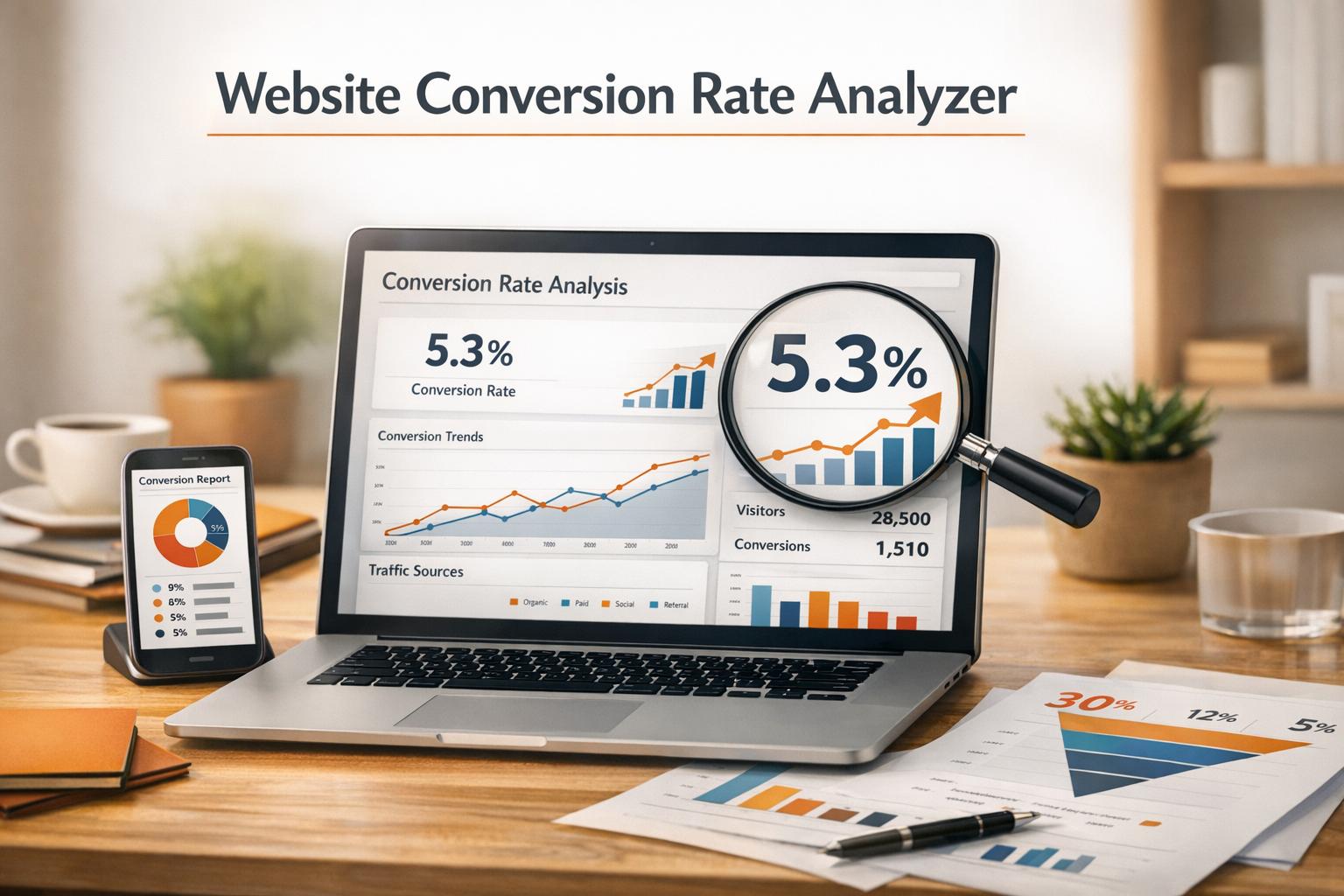
Unlock Your Website’s Potential with a Conversion Rate Analyzer
Running a website is exciting, but are you getting the most out of your traffic? Many site owners overlook a critical metric: the percentage of visitors who actually take action. Whether it’s making a purchase or filling out a form, understanding this number can transform your online strategy.
Why Tracking Performance Matters
Every visitor to your site is an opportunity. If only a tiny fraction converts, you’re leaving money on the table. A tool that breaks down your stats can reveal where you stand and highlight areas for growth. Imagine knowing exactly how many more sales or leads you need to hit your goals—that’s the kind of clarity you need to make smart decisions.
Practical Steps to Boost Results
Once you’ve got your numbers, the real work begins. Maybe your call-to-action isn’t grabbing attention, or your page takes too long to load. Small tweaks, like sharper messaging or a mobile-friendly design, can nudge your metrics in the right direction. Pair this insight with ongoing testing, and you’ll start seeing steady improvement in how your audience engages with your content.
FAQs
What exactly is a conversion rate, and why does it matter?
A conversion rate is the percentage of visitors who take a desired action on your site, like buying a product or signing up for a newsletter. It’s calculated by dividing conversions by total visitors and multiplying by 100. It matters because it shows how effective your site is at turning traffic into results. A low rate might mean your design, messaging, or user experience needs a tweak. Tracking this helps you focus on what’s working and fix what isn’t.
What’s a good conversion rate for my website?
Honestly, it depends on your industry and goals. E-commerce sites often aim for 2-3%, while lead generation pages might target 5-10%. It’s less about a universal benchmark and more about beating your own past performance. Use our tool to set a realistic target based on your data, then experiment with changes like clearer calls-to-action or faster load times to inch closer to that goal.
How can I improve my website’s conversion rate?
Start by analyzing where visitors drop off—tools like heatmaps can show this. Small changes often make a big difference: tweak your headlines to be more compelling, simplify forms, or make buttons stand out. A/B testing is your friend here—try two versions of a page to see what resonates. Also, ensure your site loads fast and works well on mobile. If our tool shows a gap to your target, we’ll suggest specific ideas to test based on your numbers.

Sign up for the newsletter and be the first to read our articles.