

Overview of Common Stains
Full overview of the most common stains, including how to identify them and treat them
When it comes to tracking your business's visibility in Google's Local Map Pack, tools like BrightLocal, LocalFalcon, Whitespark, Moz Local, and Synup offer unique features to help you stay competitive. These tools simulate local searches and provide detailed insights into how your business ranks across different areas. Here's a quick breakdown:
Quick Comparison:
| Tool | Starting Price | Grid Resolution | Tracking Method | Key Features |
|---|---|---|---|---|
| BrightLocal | $35/month | Medium (7x7) | IP Proxy | Citation management, review tools |
| LocalFalcon | $24.99/month | High (21x21) | GPS (UULE) | Geo-grid heatmaps, AI-driven insights |
| Whitespark | $14/month | Medium (15x15) | GPS (UULE) | Citation finder, visibility score |
| Moz Local | $14/month | Basic | Cookies | Listing management, review tools |
| Synup | $79/month | High | GPS (UULE) | Multi-location tracking, AI content |
Each tool serves different needs. Choose based on your budget, the level of detail you require, and whether you need additional features like citation management or review monitoring.

Local Map Pack Tracking Tools Comparison: Features, Pricing & Accuracy
BrightLocal is a comprehensive local SEO platform that combines map pack tracking, citation management, review monitoring, and Google Business Profile (GBP) audits. It’s built to simplify local SEO tasks, helping home service businesses maintain consistent NAP (Name, Address, Phone) details, gather reviews, and track ranking performance - all from one centralized dashboard.
A standout feature of BrightLocal is its Local Search Grid tool (previously called the Local SERP Checker Grid), which provides a heatmap of rankings across Google Local Search and Google Maps. Beyond map pack tracking, the platform offers:
BrightLocal uses a flat monthly subscription model, avoiding pay-per-scan credits. Plans include:
A 14-day free trial is available for all plans.
BrightLocal is designed with local SEO workflows in mind, making it accessible even for users without in-depth SEO experience. Its interface consolidates data for citations, reviews, and rankings into a single dashboard, eliminating the need to juggle multiple tools. Additional features, such as white-label PDF reports, REST API access, and webhook notifications, make it easy for agencies to integrate data into custom dashboards or set up alerts via platforms like Slack.
BrightLocal uses IP proxy-based geolocation to simulate searches from specific areas. While this method provides a general view of rankings, it’s less precise than UULE-based GPS-coordinate simulations for hyper-local queries - especially in densely populated urban areas where rankings can vary significantly over short distances. The tool is rated 8.5/10 overall, but its grid accuracy is classified as "Medium", and its scan speeds are slower compared to more specialized tools. Additionally, the maximum grid resolution is not publicly disclosed.
Next, let’s take a closer look at LocalFalcon and its approach to map pack tracking.
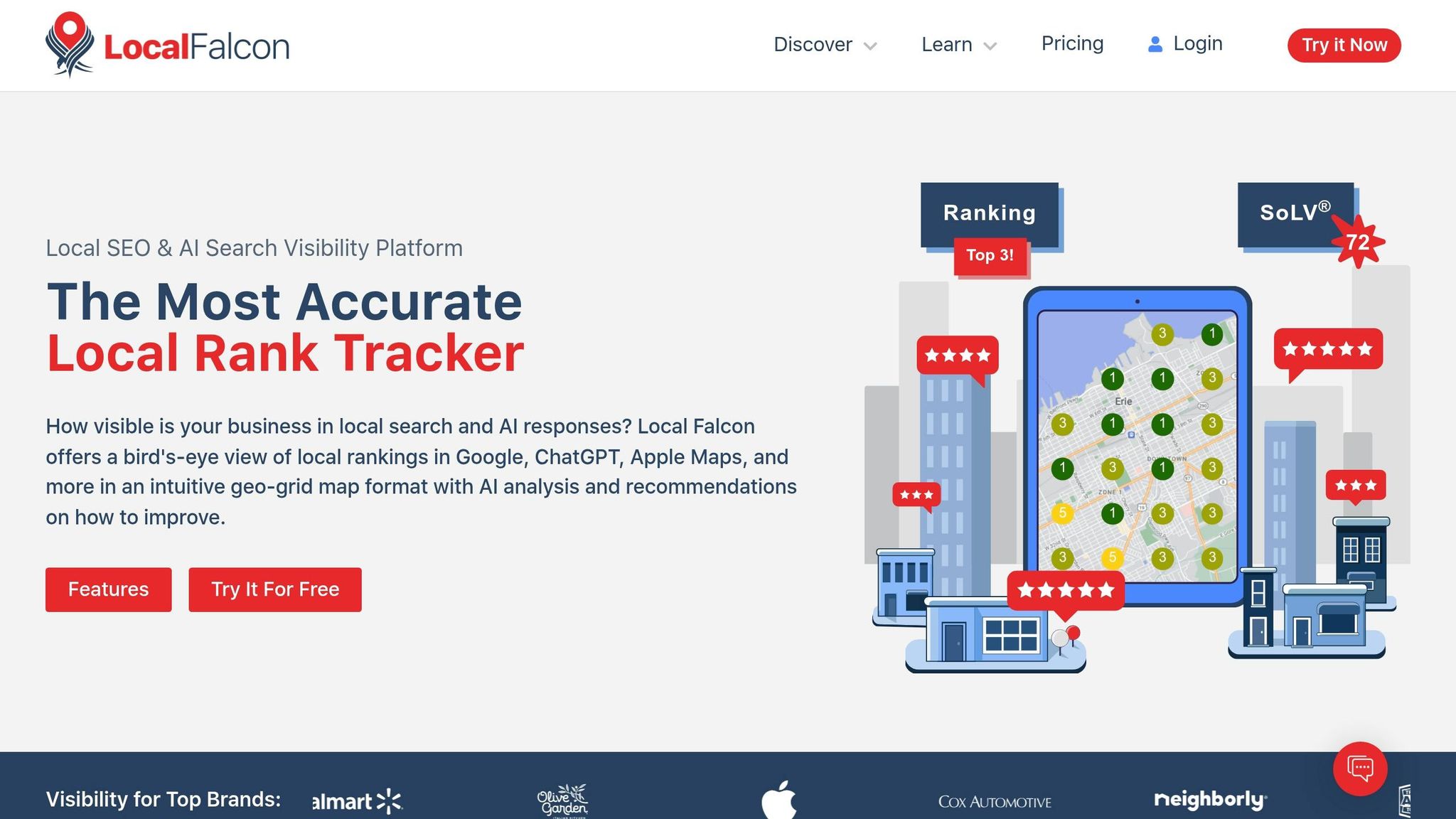
LocalFalcon, like other tools in this comparison, focuses on providing precise insights into local rankings. It’s a specialized map pack tracking tool best known for its geo-grid heatmap system, which offers detailed visual data. Designed for businesses that need granular tracking, it monitors rankings across Google Maps, Apple Maps, and various AI-driven platforms. This tool is especially favored by solo practitioners and data analysts who value its detailed visualizations of local search performance. Let’s dive into the features that make it stand out.
LocalFalcon’s most notable feature is its customizable geo-grid, which can range from 3x3 to 21x21 points - offering up to 441 data points to pinpoint exact Map Pack rankings. It also introduces the Share of Local Voice (SoLV®) metric, which quantifies how often a listing appears for specific terms within a defined area.
The platform goes beyond basic tracking with tools like Falcon AI and Falcon Agent, which provide automated optimization suggestions and real-time SEO guidance. It also includes Falcon Guard, a feature that monitors changes to a Google Business Profile and flags unauthorized edits that could harm rankings. Additionally, users can leverage side-by-side comparisons with SoLV differential reporting to identify market share gaps.
"Local Falcon is a game changer, this level of insight into local pack rankings is so much better than trying to track ranking with multiple zip codes."
– Jara Moser, Director of Digital Knowledge, Novulum
LocalFalcon uses a credit-based subscription model starting at $24.99 per month. Each geo-grid point typically consumes one credit. As of April 2026, the pricing tiers are:
Credits expire at the end of each 30-day billing cycle, so they don’t roll over. This structure supports the tool’s extensive functionality.
LocalFalcon’s interface is praised for being clean and easy to navigate. It integrates with Looker Studio and offers a robust API, making it simple to incorporate ranking data into custom dashboards. Users can schedule recurring scans to track performance over time and receive automated alerts for major ranking changes. To manage credit usage efficiently, unnecessary grid points can be disabled while still collecting critical data from key areas.
LocalFalcon uses UULE-based GPS coordinate simulation, a method widely regarded as the gold standard for local rank tracking. This approach replicates searches from precise GPS locations, allowing users to see rankings as real users would. The tool supports up to 21x21 grids for highly detailed, block-by-block analysis. A full 21x21 grid scan typically takes 10–15 minutes. With a rating of 9.0/10 for its visual and analytical capabilities, LocalFalcon remains a trusted choice among local SEO professionals.
"Local Falcon is the original multipoint local rank tracker to monitor the coverage area strength of a Google Business Profile."
– Yan Gilbert, Google Platinum Product Expert and Local SEO Consultant
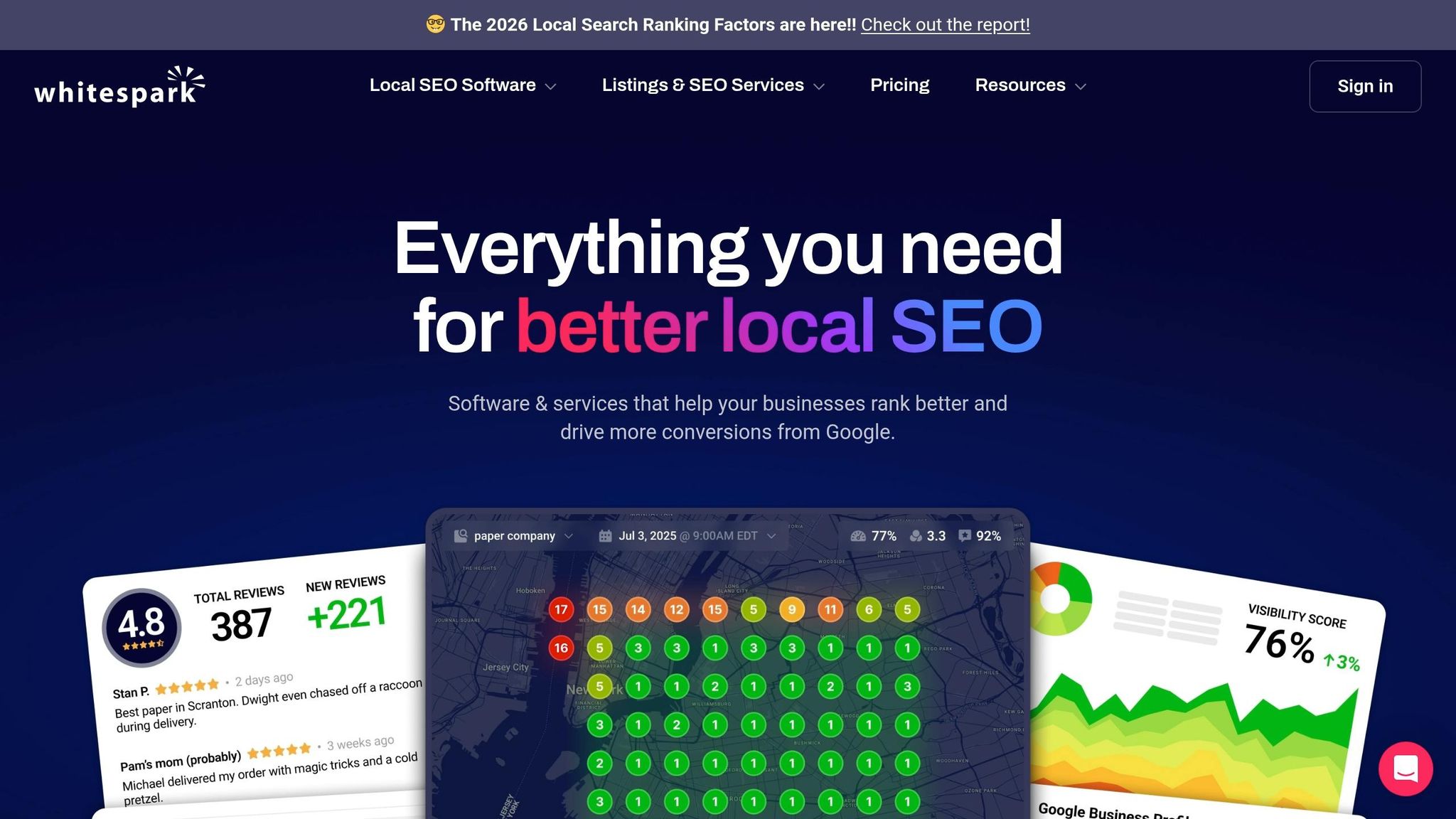
Whitespark takes a modular approach to SEO tools, offering flexibility and precision for businesses of all sizes. Used by over 100,000 companies worldwide, from solo entrepreneurs to large agencies, it allows users to pay only for the tools they need. Whether you're focused on rank tracking, geo-grid visualization, or citation management, Whitespark tailors its offerings to your specific goals. One standout feature is its ability to separate Local Pack rankings from organic results, providing a clearer view of how different SEO strategies perform across search types.
Whitespark's Local Ranking Grids are a game-changer for visualizing rankings. These grids, which can go up to 15x15 (225 data points), create detailed heatmaps that show how your business performs in local searches across geographic areas. Another standout feature is its Google Business Profile audit, which helps identify duplicate listings and keep your local search presence clean and effective. David Mihm, a respected voice in the SEO world, praises it highly:
"the most valuable Enterprise local search product to come along in at least 5 years, maybe ever. It's insanely accurate at identifying Google duplicates at scale".
Additionally, Whitespark offers a Visibility Score, which estimates click-through rates for all tracked keywords. This metric can be filtered by keyword groups, locations, and date ranges, helping you identify areas for improvement. Its competitor tracking tools allow you to monitor rivals' rankings and analyze their Google Business Profile categories, giving you insights to refine your strategy. By using GPS-based tracking, Whitespark ensures pinpoint accuracy in its results.
Whitespark's pricing structure is built to accommodate a range of needs. Its Local Rank Tracker offers both monthly and annual billing, with discounts for yearly plans:
| Plan | Monthly Billing | Annual Billing | Keywords |
|---|---|---|---|
| Small Business | $17/month | $14/month | 100 |
| Specialist | $35/month | $30/month | 250 |
| Agency | $70/month | $60/month | 1,000 |
| Enterprise | $140/month | $117/month | 2,500 |
For Local Ranking Grids, pricing starts at $10/month for 2,000 credits, translating to about $0.003–$0.005 per grid point. This modular setup allows businesses to start small - just $14/month for basic rank tracking - and scale up by adding geo-grid visualization or other features as needed.
Whitespark offers white-label reporting with custom domains (e.g., rankings.yoursite.com), making it a great choice for agencies looking to provide branded reporting to clients. However, some users feel the platform's interface looks a bit outdated compared to newer tools. Despite this, Greg Gifford from SearchLab highlights its strengths:
"If you do Local SEO, the Local Rank Tracker will be one of your 'I can't live without this tool' tools. It's flat out gorgeous and by far the best visual representation of rankings of any tool on the market".
Grid scans are efficient, typically completing in 10–15 minutes. These features make Whitespark a strong option for SEO professionals who need detailed, client-ready reports.
Whitespark employs a UULE-based methodology, which simulates searches using precise GPS coordinates. This method is widely recognized as the gold standard for local rank tracking. Elizabeth Linder from Kick Point underscores its unique capabilities:
"Whitespark, to my knowledge, is one of the only rank trackers that separates Google Local Pack and Organic results, so you can see how your true organic rankings are improving or decreasing over time".
The platform's ability to track rankings across 225 map points and narrow searches to specific geo-coordinates, zip codes, or city centers ensures you get the most accurate data for your target areas. Its detailed tracking and long-standing reputation make it a reliable choice for local SEO. Next, let’s explore how Whitespark compares in overall value to other tools.
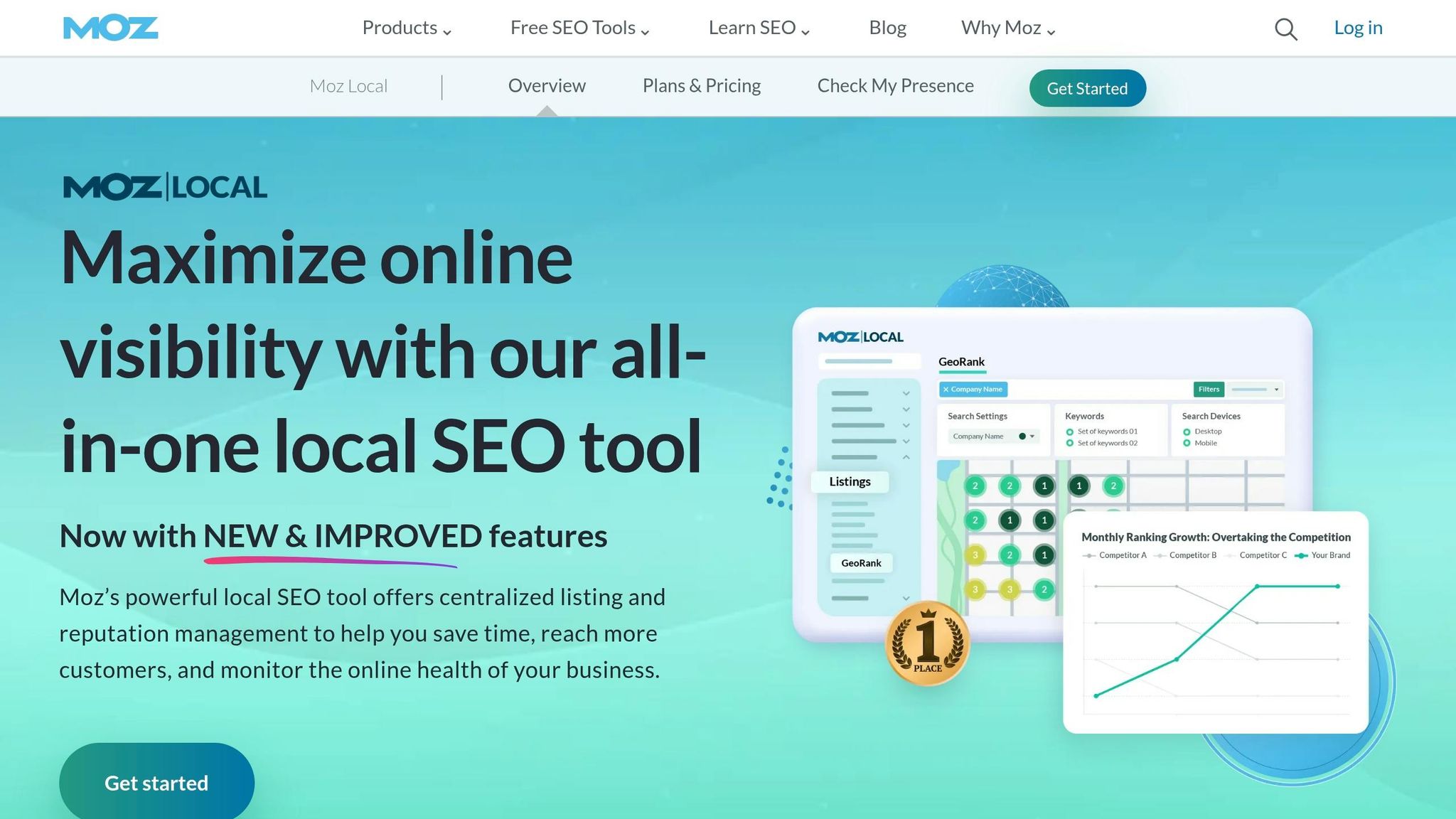
Moz Local provides a practical solution for local SEO, catering to businesses ranging from single-location service providers to multi-location organizations like healthcare systems. It simplifies listing management and map pack tracking in one platform. By automating the distribution of business information to over 90 directories and data aggregators - including Google, Facebook, and Apple Maps - it saves users approximately 24 hours of manual work annually. Sean Pomory from Chesapeake Regional Healthcare shared his experience:
"Moz Local is the perfect solution for us. Our Google Business Profile traffic has increased drastically... we were averaging about 30,000 views each month... now it's well over 200,000".
One standout feature is the Local Grid, which generates heatmaps to show where your business appears in the map pack across various neighborhoods. This is especially useful for home service providers, like plumbers or HVAC technicians, to identify areas where competitors might be outranking them.
The platform also integrates with social media platforms like Facebook, Instagram, LinkedIn, TikTok, and Google Business Profiles, enabling users to schedule posts directly from a single dashboard. It centralizes customer reviews from multiple platforms and even provides AI-driven response suggestions tailored to specific feedback. Moz Local also uses browser cookies instead of IP addresses to determine search locations, offering more accurate, location-specific results.
Moz Local offers a straightforward pricing model based on the number of locations:
For businesses managing 50 or more locations, custom Enterprise pricing is available, along with a dedicated account manager. Notably, upgrading to the Elite tier saves $19 annually compared to adding Listings AI to the Preferred plan.
Moz Local is designed to streamline local SEO efforts through its user-friendly dashboard, which consolidates key data in one place. Blake Denman from RicketyRoo Inc highlighted its efficiency:
"Moz Local helps us streamline our process by automatically syncing business information and pushing it out to those directories".
However, the interface feels somewhat outdated compared to newer tools, and its rank tracking lacks detailed keyword-level insights over time. Marketing expert Krunal Vaghasiya commented:
"Moz Local is a solid pick if you just need basic listing management and don't want to think too hard about local SEO".
Moz Local excels at tracking rankings on a granular level - city, state, neighborhood, and ZIP code - offering a reliable reflection of what local searchers see. This precision is crucial since proximity heavily influences local pack rankings. By using browser cookies for location-specific results, it provides more accurate data than IP-based methods.
While Moz Local is strong in managing citations and tracking basic visibility, it may not match the precision of more advanced rank tracking tools when it comes to grid-based analytics. Listing updates are distributed through data aggregators for wide coverage, though it may take several weeks for changes to appear across all directories. This level of accuracy makes Moz Local an effective tool for businesses focused on improving local visibility.
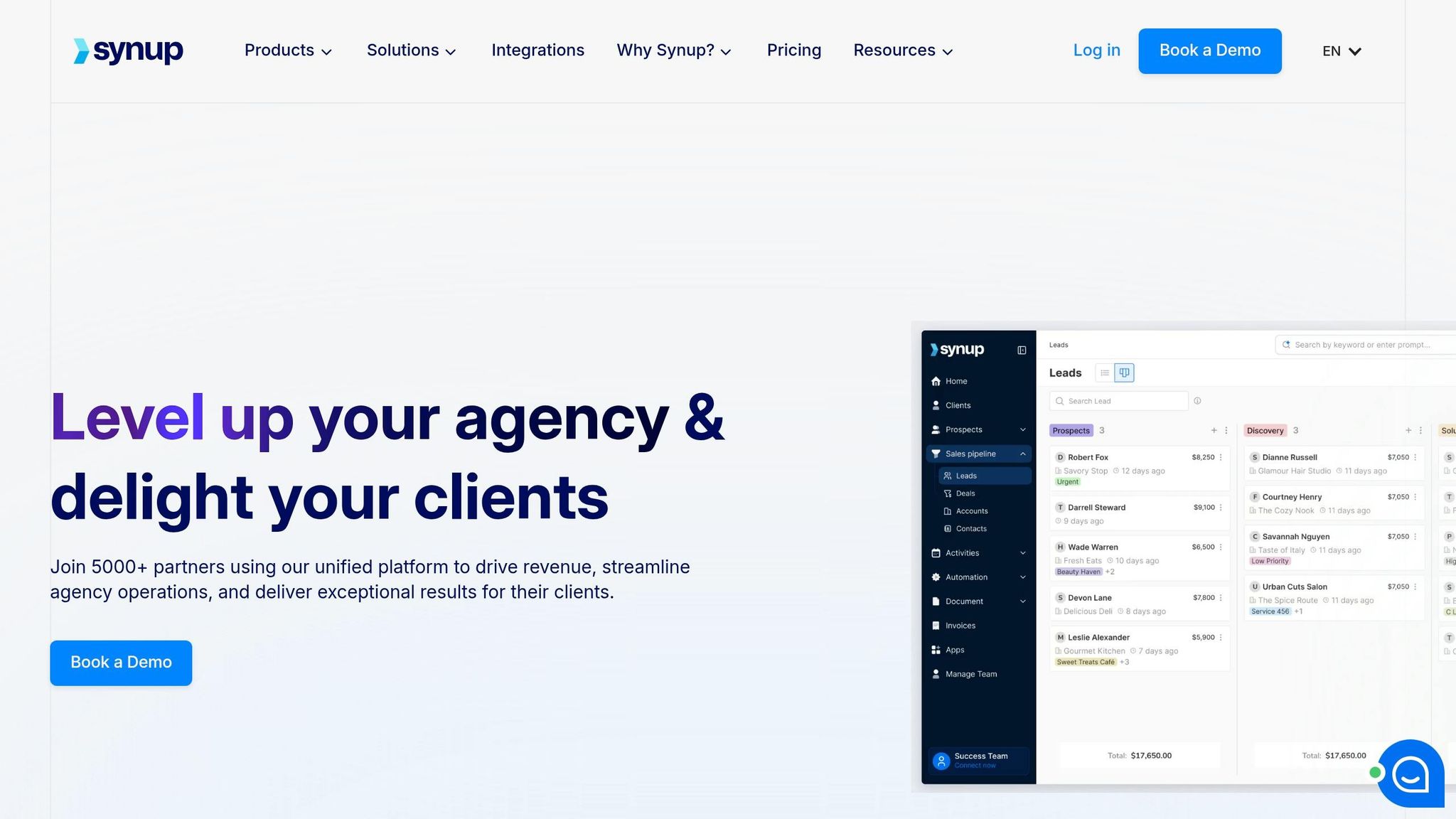
Synup simplifies local SEO management for businesses with multiple locations by combining map pack tracking, listings management, review monitoring, and social media tools into one platform. It manages business listings across more than 75 directories and monitors reviews from over 20 sources, making it a comprehensive solution for local SEO needs.
One standout feature is Synup's neighborhood-level grid system for map pack tracking. This tool provides a block-by-block view of where a business appears in local search results, offering precise insights. This is especially valuable for home service providers, as proximity often plays a key role in attracting customers. By simulating searches from specific GPS points, the grid system identifies visibility gaps and highlights areas needing improvement.
Synup also tracks keyword rankings across both Google Maps and traditional Google Search, ensuring you can compare performance between the two. Bulk keyword uploads and automated tracking setups make it easy to manage hundreds or even thousands of locations. The platform also offers branded, client-ready PDF reports or interactive dashboards, which can be scheduled for weekly or monthly delivery.
Synup uses a tiered pricing model designed for agencies managing multiple clients. Here’s a breakdown:
Additional features are available as add-ons:
Synup also offers a 14-day free trial, which includes 15 listings and daily AI-generated posts.
Synup’s user-friendly design makes it an efficient tool for agencies managing multiple client locations. It automates many tasks, saving time and reducing the complexity of handling numerous accounts. Abid A., a Managing Partner, shared:
"Even if you're not tech-savvy, Synup is user-friendly and straightforward to navigate."
The centralized dashboard allows seamless syncing of business information across directories, while the AI-driven content creation tool automates social media posts. However, some users have noted that the mobile app could be improved and that the site audit data isn’t always accurate. Despite these drawbacks, the platform received a 5/5 rating on SoftwareSuggest, with users particularly praising its review management capabilities. Some, however, feel the pricing is a bit steep.
Synup excels in delivering precise local ranking data through its advanced simulation tools. By simulating searches from specific GPS coordinates, the platform provides highly accurate, hyper-local ranking insights. This is especially important for businesses where visibility depends on the searcher’s exact location. The block-by-block tracking feature offers a clear picture of service area visibility, rather than relying on broader city-level rankings. While the review monitoring and listing management tools are well-regarded, some users have raised concerns about the accuracy of the site audit features.
Here’s a quick breakdown of the strengths and limitations of each tool based on the earlier discussion.
BrightLocal offers a robust all-in-one platform that combines citation management, review monitoring, audits, and map pack tracking for Google Maps. This makes it a great pick for agencies handling multiple clients. However, its reliance on IP proxy–based tracking can reduce accuracy for hyper-local searches. Additionally, its maximum grid size of 7x7 limits customization for grid resolution.
LocalFalcon stands out as the original provider of geo-grid heatmaps, offering up to a 21x21 grid for highly detailed, block-level ranking insights. It also includes newer AI-driven visibility metrics. On the flip side, it doesn’t have a free plan, scans take longer (typically 10–15 minutes), and credits expire monthly unless you choose an annual subscription.
Whitespark is well-known for its citation finder and affordable entry-level pricing. It uses UULE-based tracking, which ensures more precise results, and supports grids up to 15x15. That said, its interface feels outdated compared to newer platforms, scan speeds are slower, and it doesn’t offer a free tier for trial purposes.
Moz Local shines in listing management and ensuring NAP consistency, which is essential for maintaining citation accuracy. Its simplicity and $14-per-month pricing make it a beginner-friendly option from a trusted name in the industry. However, it lacks geo-grid heatmap tracking, offers only basic rank tracking, and doesn’t include AI-powered insights.
Each tool discussed brings something different to the table for tracking local map pack performance, catering to various business needs. Picking the right tool comes down to your budget, technical know-how, and how aggressively you aim to expand your local reach.
For plumbers, electricians, and HVAC contractors looking to pinpoint visibility gaps, LocalFalcon stands out at $24.99/month. Its detailed 21x21 geo-grid heatmaps provide a precise look at how rankings vary from one street to the next. This level of detail is crucial - your business might rank #1 in one spot but disappear just a few blocks away. Considering that 76% of people who search locally visit a business within 24 hours, understanding your exact visibility can directly impact customer traffic and revenue.
BrightLocal offers a broader solution at $35/month, combining rank tracking with citation management and review monitoring. Reviews are a key factor in local pack rankings, and with the Map Pack capturing about 70% of local search clicks, this tool is ideal for businesses focused on maintaining a strong online presence. On the other hand, Moz Local, priced at $14/month, is a simpler option for businesses that prioritize keeping their Name, Address, and Phone number consistent across directories. Finally, Whitespark provides flexible pricing starting at $14/month, with the option to add geo-grid visualizations for more detailed insights.
Each tool serves a different purpose, making it easier for businesses to choose based on their specific goals and resources.
To keep your local SEO efforts sharp, make it a habit to check your map pack rankings regularly - ideally every day or at least a few times a week. This consistent monitoring allows you to spot changes quickly and stay visible in search results, helping your business stay competitive in local markets.
When it comes to deciding on the right grid size for local SEO tracking, it all boils down to the level of detail and coverage you’re aiming for. Smaller grids, like 50m x 50m or 100m x 100m, are perfect for pinpointing rankings in highly localized areas. These are ideal if you want to focus on specific neighborhoods and get precise data.
On the other hand, larger grids, such as 200m x 200m or bigger, are better suited for covering broader regions. However, they might not capture the finer nuances of smaller areas. Ultimately, the choice depends on the size of your service area and your specific optimization goals.
Tracking rankings can differ widely depending on the method and scope of data collection. Single-point tracking focuses on results from one specific location, which might not give a full picture of how visible a site is across different areas. On the other hand, grid-based or heatmap tracking simulates searches from multiple locations, offering insights into how rankings vary geographically. Additionally, tracking tools often emphasize different elements - such as maps, keywords, or competitor data - resulting in variations based on their specific approach and priorities.
Sign up for the newsletter and be the first to read our articles.


Every single person on our agency team has spent a lot of time in the field either running their own business or working for larger marketing agencies. We have all put in the time responding to leads, helping customers, scheduling and doing services. This gives us a massive advantage when making decisions.
One thing that has always been very special to us, is the fact that (excluding spam / people that never used our services) we do not have any bad reviews. This absolutely does not mean we have never had unhappy clients, but if it happens, we make it right, and stand behind our promises.
We have seen, time and time again, other agencies using strategies and structuring campaigns the way that they are technically supposed to. Most of these "best practices" that are taught in our industry, simply do not transfer into local lead gen. This is partially because we do have a much different target audience, and are typically spending less, however optimizing for website traffic does not work here.
We have been there, jumping into starting a home service business, struggling, and doing everything wrong. It's humbling. Our team has all felt the highs and lows, which is why we get so excited for our clients to win, we know how good it feels.

Estatehub is not a normal agency, we know "clicks" don't get you sales. Let us show you how lead gen experts do it.

