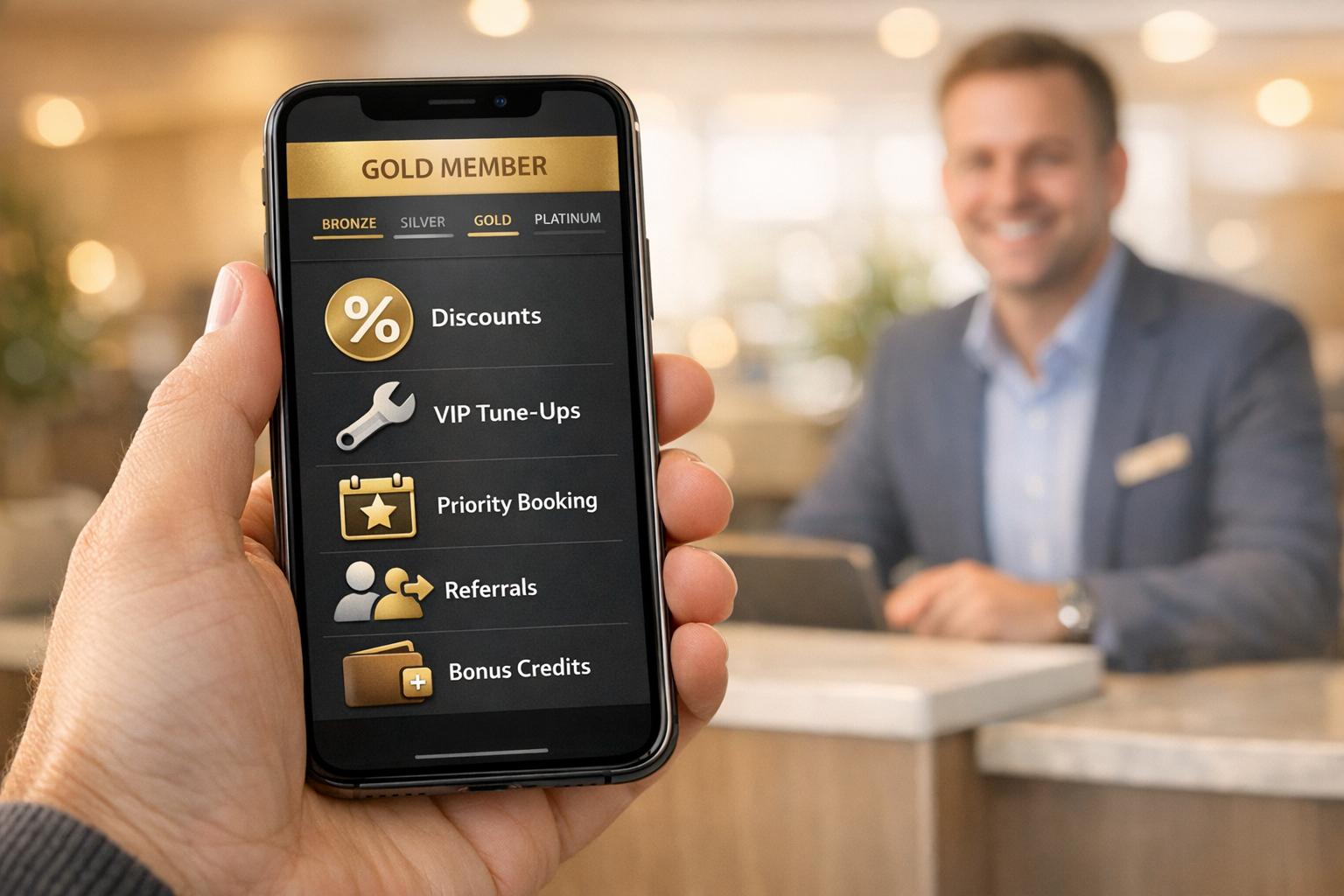
In the home services industry, retaining loyal customers is far more cost-effective than acquiring new ones. Studies show that acquiring a new customer can cost 5–25x more, while boosting retention by just 5% can increase profits by 25–95%. Loyal customers also spend 67% more over time. To help businesses strengthen customer loyalty, here are 10 effective reward ideas:
- Tiered Loyalty Discounts: Offer increasing discounts (e.g., 5%, 10%, 15%) as customers book more services.
- Annual VIP Maintenance Visits: Provide free tune-ups or maintenance to show appreciation and build trust.
- Priority Scheduling: Guarantee faster service, especially during emergencies.
- Exclusive Pricing Bundles: Create discounted service packages for loyal clients.
- Upgrade/Add-On Credits: Let customers earn credits toward home upgrades or add-ons.
- Anniversary & Milestone Gifts: Celebrate customer anniversaries with small gifts or free services.
- Invite-Only Membership Plans: Offer premium memberships with perks like discounts, priority service, and waived fees.
- Charity Donations: Make donations in customers’ names to local causes they care about.
- Referral Bonuses: Reward loyal customers for referring new clients.
- Personalized Home Profiles: Use customer data to deliver tailored services and thoughtful perks.
These strategies not only reward loyalty but also encourage repeat business and word-of-mouth referrals. Tools like Estatehub CRM can automate tracking, reminders, and reward management, making it easier to implement these programs effectively. By focusing on loyalty, businesses can create lasting relationships and a steady revenue stream.
Learn How Loyalty Programs Can Benefit Your Small Business | GoDaddy
1. Tiered Loyalty Discounts for Repeat Service
A tiered loyalty discount program is a straightforward way to reward repeat customers and keep them coming back. For example, you can offer 5% off on their second service, 10% off on their third, and 15% off on their fifth or more. Each booking earns them a better discount, making your service more appealing than the competition. These discounts are exclusive to loyal customers, keeping your costs under control.
As George M. Espinoza Acosta, author of CallJolt, explains:
"The fundamental rule of a loyalty program is that the reward must be meaningful to the customer and economically sustainable for the business." - George M. Espinoza Acosta
Real-world examples prove how well tiered programs work. One home service contractor created a Bronze, Silver, and Gold program, offering 10% off at the Bronze level and 20% off plus priority scheduling at Gold. Within just six months, they saw a 30% jump in repeat bookings. Similarly, HVAC companies using tiered loyalty programs reported retention rates of 80–90% among loyalty members, compared to only 30–50% for non-members.
To make this process seamless, integrating a customer relationship management (CRM) system is key. Without it, tracking customer tiers can become a logistical nightmare. A CRM automatically logs completed services, flags when a customer reaches a new tier, and even sends notifications - all with minimal effort. For example, a residential HVAC company using a CRM-integrated loyalty program reported a 31% boost in seasonal campaign responses, translating to $8,400 in revenue from repeat bookings. Tools like Estatehub's CRM are designed to handle this automation, making loyalty tracking effortless for home service providers.
Pro tip: Tie your tiered program to annual maintenance plans. Customers who enroll in a maintenance plan can start at a higher tier, giving them immediate value and increasing the chances they'll remain loyal over time.
2. Annual VIP Maintenance or Tune-Up Visit
An annual tune-up isn’t just about maintaining equipment - it’s a chance to strengthen your connection with long-term customers. Here’s why it matters: 70% of customer losses in home services happen because customers don’t feel valued. That’s a huge opportunity to stand out.
From a cost perspective, a typical maintenance visit costs around $100 - this includes 1.5 hours of technician labor ($60), fuel ($15), and overhead ($25). But the payoff is clear. Customers on maintenance plans have an impressive 89% retention rate, compared to just 42% for those without a plan. Over time, this loyalty adds up. A single customer can generate over $47,200 in lifetime value through maintenance, repairs, and eventual system replacements.
Take Carlos, a handyman contractor in Sacramento, as an example. By introducing seasonal maintenance reminders and follow-up calls, he boosted his retention rate from 28% to 63%. That meant his repeat customer count nearly doubled, jumping from 39 to 91. The result? His revenue soared from $47,500 to $89,400 in just one year, without needing to expand his customer base.
George M. Espinoza Acosta from CallJolt captures this perfectly:
"A maintenance plan that is just 'two tune-ups per year' competes on price. A plan that is 'two tune-ups, priority 24-hour scheduling, 15% off all parts and labor...' is a relationship." - George M. Espinoza Acosta
This approach turns routine maintenance into a trust-building opportunity. It also pairs seamlessly with other loyalty perks mentioned in this article.
Here’s where a CRM can make all the difference. Tools like Estatehub’s CRM automatically track service dates, equipment history, and customer preferences. They can even send personalized reminders 2–3 weeks before peak seasons, ensuring you stay top of mind. Contractors using these automated systems retain customers at 2–3 times the rate of those waiting for customers to call them.
Pro tip: Don’t market the annual visit as just a “freebie.” Instead, position it as an exclusive VIP benefit for your most loyal customers. This small shift in messaging increases its perceived value and makes customers feel appreciated, not just serviced.
This strategy lays the groundwork for even more loyalty perks, which we’ll dive into next.
3. Priority Scheduling and Emergency Response Access
Emergencies like burst pipes or a failed AC system can’t wait, and that’s where priority scheduling becomes a game-changer for long-term customers. This perk ensures loyal customers get first access to available service slots - often ahead of others. And honestly, this benefit can do more to keep customers around than any discount ever could. It’s not just about speed; it’s about building trust and loyalty by showing you’ve got their back when it matters most.
The reasoning behind this is simple. As Shambhav from ServiceAgent explains:
"Priority scheduling is the key motivator. When a heat wave hits and your board is lit up with 50 calls, members skip the line. You guarantee them service within 24 or 48 hours. This exclusivity creates major FOMO for non members."
What’s great about this approach is that it doesn’t require a big investment. It’s about reallocating resources, not adding costs. And the financial argument is hard to ignore: bringing in a new HVAC customer might cost you $200 to $350, but keeping an existing one? That’s just $40 to $50. Even better, boosting retention by just 5% can increase profits by 25% to 95%.
Here’s a smart way to structure it: offer a 48-hour service guarantee for standard members, while VIPs get same-day service and 24/7 access through a dedicated emergency line. In industries like restoration, top-tier customers often enjoy a 4-hour emergency response guarantee. That’s a high bar, but it’s worth thinking about for other home services.
Technology makes this even easier. A CRM system, like Estatehub, can tag VIPs, prioritize their calls, and automatically move them to the top of the queue. It can also send SMS updates with technician details and real-time tracking. Considering that 98% of homeowners read SMS messages, this is a powerful way to keep customers informed during critical moments. Plus, customers who enjoy a smooth and quick booking process are 2.1 times more likely to return compared to those who face delays. By leaning into CRM tools, you can deliver on the promise of priority service and make your loyalty program stand out.
4. Exclusive Pricing Bundles for Long-Term Customers
After introducing tiered discounts and VIP visits, offering bundled services is another effective way to reward loyalty and encourage long-term customer relationships. By bundling services at a reduced rate, you not only show appreciation for loyal customers but also create a steady stream of recurring revenue. This approach boosts both customer satisfaction and financial predictability.
Here’s a striking statistic: customers on service plans deliver 2.3x higher lifetime value compared to one-time clients across all home service industries. That’s a game-changer. It’s the difference between constantly chasing new leads and building a dependable, loyal customer base.
When designing bundles, George M. Espinoza Acosta from CallJolt offers a valuable perspective:
"A maintenance plan that is just 'two tune-ups per year' competes on price. A plan that is 'two tune-ups, priority 24-hour scheduling, 15% off all parts and labor, free diagnostic calls, and a dedicated tech who knows your system' is a relationship."
This distinction is crucial. A well-structured bundle - offering perks like waived diagnostic fees, 10–20% discounts on parts and labor, and priority scheduling - feels more like a membership than a simple discount. It’s about creating consistent value that strengthens the customer relationship over time.
To make this process seamless, tools like Estatehub can identify which customers are primed for a bundle offer based on their service history. These tools can also automate outreach at the perfect moment. Research suggests the ideal time to pitch a loyalty bundle is about 45 days after a successful service call - giving enough time for trust to build without losing the customer’s attention.
5. Personalized Home Upgrade or Add-On Credits
Personalized credits take loyalty rewards to the next level by offering perks tailored specifically to a customer's home needs. Instead of a blanket discount, these credits build up over time and can be used for specific upgrades - like adding a smart thermostat, installing a UV light system, or sealing ducts.
As Tom Talbot from FieldEdge points out:
"Returning customers are 50% more likely to purchase add-ons like air purifiers, smart thermostats or duct sealing."
This highlights the power of incentivizing additional purchases. By allowing customers to earn $50–$100 in credits each year, they can save up for significant upgrades or replacements. Over a few years, this system not only boosts customer loyalty but also makes switching to competitors less appealing. Shambhav from ServiceAgent sums it up well:
"It is hard to justify buying from a competitor when they have built up $500 in credit with you."
Using CRM data makes these rewards even more effective. Instead of sending out generic offers, businesses can tailor credits to specific customer needs. For instance, a homeowner with an older air handler might receive a credit for a free filter replacement. Someone with recurring plumbing issues could get a drain line clearing credit. Estatehub's CRM tools make this process seamless by tracking service histories and automating personalized outreach.
Here's a quick look at common credit types and their benefits:
| Credit Type | Typical Value | Primary Benefit |
|---|---|---|
| Equipment Replacement Credit | $50–$100/year | Builds long-term loyalty by increasing switching costs |
| Service/Repair Credit | 10%–20% discount | Encourages prompt decisions on repairs |
| Add-on Credit | Free filter/UV light | Boosts system efficiency and creates a "club" atmosphere |
| Referral Credit | $25–$100 flat fee | Attracts new customers at a low acquisition cost |
To manage these programs effectively, businesses need a dependable CRM with features like automated credit tracking and expiration rules (usually 12 months). This ensures a smooth, hassle-free loyalty program that keeps customers engaged and coming back.
6. Anniversary and Milestone Gifts
Marking special occasions with a thoughtful gift can shift how customers see your business - from just another vendor to a familiar, trusted neighbor. Celebrating milestones like the anniversary of a major installation or a repeat service visit adds a personal touch that customers remember. As Casandra Ross, Managing Director at Criscione Bros., explains:
"Just remembering their birthday or the anniversary date of their new HVAC install is thoughtful... timing makes even a small gift meaningful."
Even simple gestures can make a big impact. A handwritten card costs less than $5, and pairing it with a local coffee or treat ($15–$30) can brighten someone's day. For clients with larger projects, like roofing or remodeling, consider offering a complimentary seasonal maintenance visit. These visits, valued between $250 and $400, not only show appreciation but also reinforce your commitment to their long-term satisfaction. The key is timing - delivering the gift within 72 hours of the milestone date keeps the emotional connection strong.
The benefits of these gestures are backed by data. Tim Brown, founder of Hook Agency, found that 83% of customers feel a deeper emotional connection to brands that send thoughtful gifts, and 92% are more likely to recommend those businesses to others afterward. These small but meaningful touches build loyalty and pave the way for creative reward strategies that keep customers coming back.
To make this process easier, many businesses use CRMs to track important dates and automate reminders for personalized gifts. Tools like Estatehub's CRM allow home service businesses to schedule milestone outreach based on service history. Including specific details - like the equipment installed or the service performed - can make a big difference, with personalized messages generating 2.8x more responses than generic ones.
Another smart strategy is to combine milestone gifts with renewal notices or invoices. Instead of simply sending a bill, attach a small thank-you gift. This turns a routine transaction into an opportunity to express genuine appreciation, leaving a lasting impression.
sbb-itb-2aa0348
7. Invite-Only Service Plans or Membership Clubs
Offering exclusive memberships transforms customer relationships from purely transactional to more personal and connected. For home service businesses, this shift isn’t just about goodwill - it’s a smart financial move. Membership holders typically boast 80–90% retention rates, compared to just 30–50% for non-members. On top of that, property owners who join loyalty programs generate 67% more revenue over five years than one-time customers. As Shambhav from ServiceAgent highlights:
"In 2026, an HVAC membership plan is not just a nice-to-have add-on, it is the financial backbone of a scalable service business."
This approach builds on traditional loyalty rewards by fostering deeper, longer-lasting connections.
A tiered membership structure works well to cater to different customer needs. For instance, a basic plan priced at $14–$18 per month might include one annual tune-up and a 5–10% discount on repairs. Meanwhile, a premium plan at $35–$50+ per month could feature perks like same-day service guarantees, waived diagnostic fees, and 20% off parts and labor. These tiers not only give customers a clear path to upgrade their benefits but also provide your business with steady, predictable income - especially helpful during slower seasons. By setting up auto-renewal through your CRM, you ensure memberships continue seamlessly.
CRM tools simplify managing these programs. Platforms like Estatehub’s CRM integration let you track membership status, automate seasonal tune-up reminders, and provide technicians with a complete service history before they arrive. Here’s a practical tip: use your CRM to trigger a membership invitation right after a successful service call, when customer satisfaction is highest. Adding auto-renewal through monthly autopay helps boost renewal rates, while a personalized welcome email and team introduction reinforce the value of the membership from the start.
8. Charity Donations Made in Customers' Names
Most loyalty rewards tend to feel like simple transactions - a discount here, a free service there. But offering a charity donation in a customer's name takes things to a whole new level. It’s a heartfelt way to say "thank you" that leaves a lasting impression. Plus, it’s surprisingly cost-effective. Did you know that 87% of consumers are more likely to support a company that aligns with a cause they care about? This kind of reward shifts the focus from short-term perks to building meaningful, long-term connections.
What makes this approach so powerful is the emotional connection it creates. While customers often forget about discounts, a donation in their name has a personal and memorable impact. In fact, two out of three people who receive non-cash rewards remember exactly why they earned them and associate those moments positively with the company. As Crystal Williams, Founder of Lemon Seed Marketing, explains:
"Saying thank you is one of the simplest marketing tools that we can utilize... and it's one of the most overlooked."
Home service businesses have already shown how effective this can be. For example, Haven Roofing in Gainesville, FL, lets homeowners pick one of three local nonprofits - Anew, Foster Florida, or Sira Gainesville - to receive a portion of the proceeds from their projects. Similarly, Lions Heating & Air in Southern California donates 5% of its monthly sales through its "Hearts & Homes" initiative, supporting families affected by Alzheimer’s year-round. These efforts don’t just help the community - they create lasting goodwill with customers.
To make this work seamlessly, use your CRM to automate donations at key milestones, like a customer’s 3-year anniversary or their 10th completed job. Personalize donation notifications with CRM merge tags, and track each customer’s total contributions in their profile. Estatehub’s CRM, for instance, makes it easy to manage donation milestones and ensure no opportunities are missed.
When selecting a charity, local organizations often resonate more with homeowners than large national groups. Partnering with a registered 501(c)(3) nonprofit ensures transparency and makes donations tax-deductible. Even small contributions can have a big impact on the community while strengthening customer loyalty. This approach doesn’t just build goodwill - it opens the door for even more creative and meaningful loyalty rewards.
9. Referral Bonuses for Long-Term Customers
Your long-term customers are often your strongest advocates. In fact, 92% of consumers trust referrals from people they know more than any other form of advertising. For home service business owners, referrals and repeat business are the top sources of new work, with 59% relying on them heavily. By linking referral incentives to your loyalty programs, you can harness this trust effectively.
A standard $25 referral bonus might not feel like enough for your most loyal clients. Instead, consider offering higher-tier rewards for these customers. For instance, provide a $50–$100 account credit for smaller, routine services and $200–$400 for larger jobs. Just ensure the bonus stays under 5% of the job's revenue to keep it cost-effective.
Referral programs save money too. The average cost per referral lead is $14–$25, significantly less than the $93–$187 typically spent on paid search campaigns.
Real-Life Success Stories
The numbers don’t lie. In 2025, a Denver-based HVAC contractor introduced a $100 account credit for referrals and started generating 15 to 20 new customers monthly - all with almost no acquisition costs. Similarly, Mike, an HVAC contractor in Wisconsin, launched a $50 gift card referral program. Within six months, 20% of his new leads came from referrals, increasing his total revenue by 15% without additional ad spend.
Timing also matters. Sending referral requests within 24–48 hours after a service - via a personalized SMS - can achieve a 34% response rate. Tools like Estatehub’s CRM can streamline this process, automating follow-ups and tagging referral leads for personalized outreach.
"The best referral incentives do not feel like incentives at all. They feel like a thank-you from a business that values the relationship." - WorkZen Blog
Double the Rewards, Double the Impact
Mutual rewards can make your referral program even more appealing. For example, give your loyal client a $50 credit while offering the new customer a $25 discount. This approach makes the referral feel more like a thoughtful gesture than a sales tactic, showing customers that their loyalty is truly appreciated. Combining this strategy with personalized rewards strengthens customer connections and encourages ongoing engagement.
10. Personalized Recognition and Home Profile Perks
Loyalty rewards like tiered discounts, VIP visits, and membership clubs are great, but adding personalized recognition through detailed home profiles can take customer retention to another level. Why do customers leave? Often, it’s not poor service - it’s feeling forgotten.
"Customers leave because they forgot you exist. They had a fine experience... But you finished the job, sent the invoice, and disappeared." - Pipeline Research Team
A detailed home profile stored in your CRM changes that. It keeps track of equipment details and customer preferences, making every visit feel personal. This profile can include service history, equipment specs, and even small but meaningful details - like filter sizes, preferred entry points, or the name of a family pet. When technicians show up knowing these specifics, the service feels thoughtful and tailored.
What to Track and How to Use It
The most impactful details to record are equipment-related: unit ages, filter sizes, last service dates, and projected replacement timelines. This data allows you to send personalized reminders, like: "Your Carrier system at [Address] was serviced 11 months ago - schedule a seasonal check before summer heat." These kinds of messages have open rates of 28–35%, nearly double the rates of standard promotional emails.
Home profiles also make it easy to offer small, thoughtful perks. For example, sending a free replacement filter in the correct size is a low-cost gesture that leaves a lasting impression. With the right data, you can even automate these outreach efforts efficiently.
CRM Makes It Scalable
Managing personalized follow-ups manually becomes impossible as your client base grows. That’s where a CRM comes in. It automates follow-ups based on real service data, so you don’t have to track every detail yourself. For example, a residential HVAC company with 400 active customers implemented automated, profile-based outreach in early 2026. Within 90 days, they generated $16,000 in new revenue - including $5,100 from reactivated customers and an 18% rebooking rate from post-job follow-ups. Tools like Estatehub's CRM integration make it easy for home service providers to set up these systems without juggling multiple platforms.
The impact is clear: HVAC customers on profile-backed maintenance plans show an 89% retention rate, compared to 42% for those without one. That’s a massive difference in recurring revenue. And it all starts with something as simple as noting a filter size. This kind of personalization doesn’t just improve retention - it builds lasting loyalty.
Comparison Table

10 Loyalty Rewards for Home Service Customers: Cost, Value & Complexity
Different service types call for tailored reward strategies. For example, pest control services and roofing contractors interact with customers in entirely different ways. To simplify the process of matching rewards with your business model, this table outlines how various reward ideas align with specific service categories, factoring in cost, perceived value, and implementation complexity.
| Reward Idea | Cost to Business | Perceived Value | Complexity to Implement | Best-Suited Categories |
|---|---|---|---|---|
| Tiered Loyalty Discounts | Moderate | Medium | Medium | Cleaning, Lawn Care, Pest Control |
| Annual VIP Maintenance Visit | Medium (labor & truck roll costs) | Very High | High | HVAC, Plumbing, Electrical, Roofing |
| Priority Scheduling & Emergency Access | Low | Very High | Medium | HVAC, Plumbing, Electrical |
| Exclusive Pricing Bundles | Moderate | Medium | Low | Power Washing, Landscaping, Handyman |
| Upgrade or Add-On Credits | Moderate | High | Medium | HVAC, Flooring, Painting, Remodeling |
| Anniversary & Milestone Gifts | Low | Medium | Low | Cleaning, Detailing, Renovations |
| Invite-Only Membership Clubs | Low | High | High | HVAC, Plumbing, Pest Control |
| Charity Donations | Variable | Medium | Low | Dog Walking, Landscaping |
| Referral Bonuses | Moderate | High | Medium | Roofing, Painting, Landscaping |
| Home Profile Perks | Low | Medium | High | HVAC, Plumbing, Roofing |
This table reveals some interesting trends in balancing cost, value, and complexity. For instance, priority scheduling offers a huge perceived value at minimal cost - it’s a game-changer for customers dealing with urgent issues like a failed AC in the middle of summer or a burst pipe during a winter freeze. On the other hand, tiered discounts and referral bonuses come with moderate costs but scale effectively based on job size. For example, referral rewards might range from $25–$50 for smaller jobs, $50–$150 for mid-tier projects, and $150–$300+ for larger jobs.
Implementation complexity is another key factor. Programs like invite-only membership clubs or home profile perks require advanced CRM systems and staff training but deliver long-term customer retention. Simpler rewards, such as milestone gifts or charity donations, are easy to roll out and work across most service categories.
Ultimately, the best reward mix depends on your business’s service frequency, ticket size, and resources. High-frequency services like cleaning or lawn care thrive with discount tiers and referral programs. Meanwhile, high-ticket, low-frequency trades like HVAC or roofing benefit most from membership clubs, priority access, and personalized perks. By aligning rewards with your operations, you can strengthen customer loyalty while staying efficient.
Conclusion
Loyal customers are one of the most critical assets for any home service business. Studies show that boosting customer retention by just 5% can increase profits by 25% to 95%, and repeat customers typically spend 67% more than first-time clients. These numbers highlight the importance of focusing on customer loyalty rather than solely chasing new leads.
The 10 reward ideas shared here - ranging from tiered discounts and VIP maintenance visits to referral bonuses and personalized home profiles - aren't merely thoughtful gestures. They’re effective strategies that foster trust, lower customer turnover, and create a reliable revenue stream. The trick is to select rewards that align with your services, profit margins, and the frequency of customer interactions.
As your business grows, manually managing customer rewards and follow-ups becomes increasingly challenging. That’s where a powerful CRM system can make all the difference. Estatehub's CRM integration, designed specifically for home service businesses, streamlines follow-ups, loyalty programs, and customer profiles. This ensures no loyal client is overlooked. Whether it’s reminding you about a tune-up or tracking referrals, automation takes the guesswork out of maintaining strong customer relationships, making your loyalty program even more effective.
"The most valuable asset a home service business can build is a loyal customer base that returns without being advertised to." - George M. Espinoza Acosta
FAQs
Which reward ideas work best for my type of home service business?
The best rewards for your customers often depend on the type of business you run. For businesses offering recurring services - like HVAC maintenance or landscaping - annual maintenance plans are a solid choice. These plans can include perks like priority scheduling, discounts, and the reassurance of regular service.
If your business focuses more on one-time jobs, consider referral incentives. These could be in the form of cash rewards, gift cards, or service credits, all of which motivate customers to spread the word about your services.
Another effective approach is using tiered loyalty programs. These reward customers based on how much they spend or how long they've been with you, encouraging them to keep coming back.
To make managing these strategies easier, CRM tools can be a game-changer. They allow you to automate and scale your rewards program, saving you time while keeping your customers happy.
How do I set reward limits so they stay profitable?
To make sure your rewards program stays profitable, it’s essential to align it with your customer lifetime value (CLV). Here's how you can do that effectively:
- Maintenance Plans: Offer discounts in the range of 10–20% on parts and labor. These discounts can be justified by the steady revenue you’ll gain from recurring customers.
- Points Systems: Set clear and manageable thresholds. For example, you could let customers redeem 500 points for a $25 credit. This keeps the system appealing without cutting too deeply into your margins.
- Referral Rewards: Instead of offering cash incentives, consider low-cost but high-perceived-value perks like priority scheduling. These kinds of rewards keep your costs down while still delighting your customers.
By carefully structuring your rewards, you can strike a balance between keeping customers happy and protecting your bottom line.
How can a CRM like Estatehub automate loyalty rewards?
Estatehub taps into CRM data to streamline loyalty rewards, using personalized actions triggered by customer milestones and job history. For instance, when a job is marked as complete, automated workflows can handle tasks like sending satisfaction surveys, review requests, or even maintenance reminders.
By segmenting your customer base, Estatehub makes it easy to run targeted campaigns. These campaigns deliver custom incentives or loyalty offers at the perfect moment, helping your business stay front and center with your audience.
Related Blog Posts

Sign up for the newsletter and be the first to read our articles.